 Czech
Czech French
 German
 Hebrew
 Noruegan
 Russian
 Spanish
 Swedish
 Polish
 Portuguese



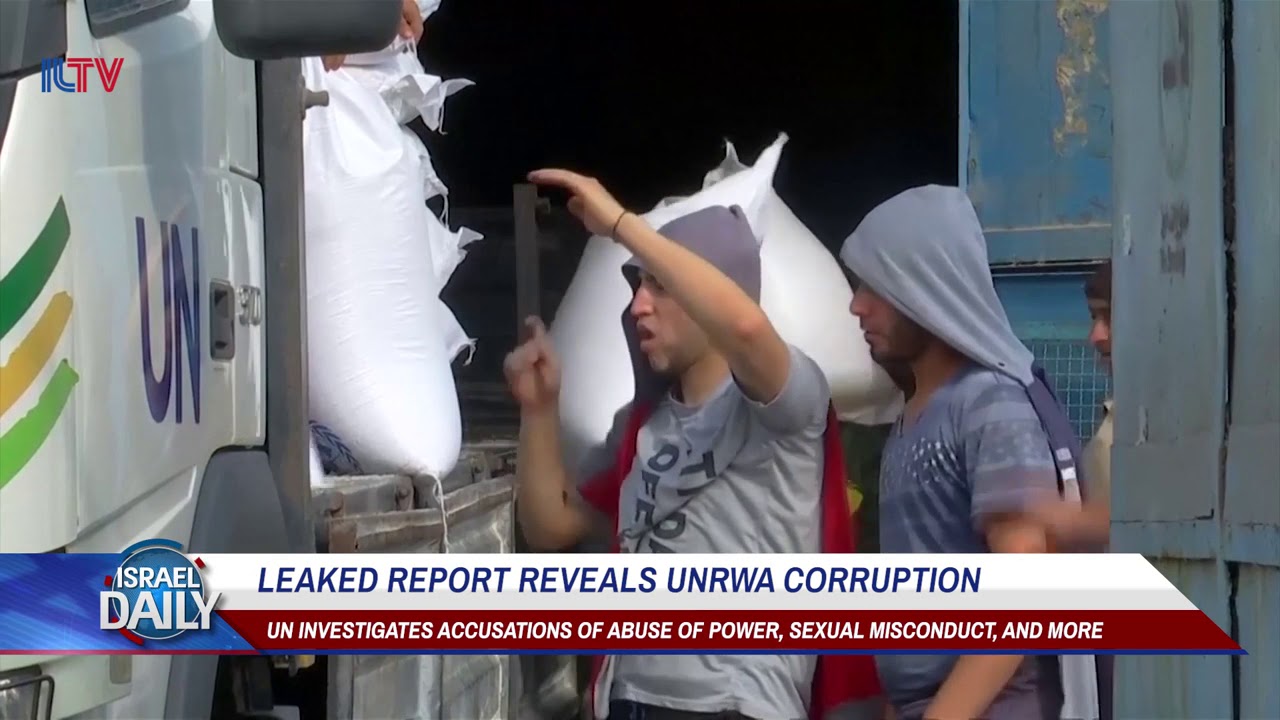
According to a leaked internal UN report, #UNRWA is being accused of mismanagement and abusing authority in the midst of a financial crisis.
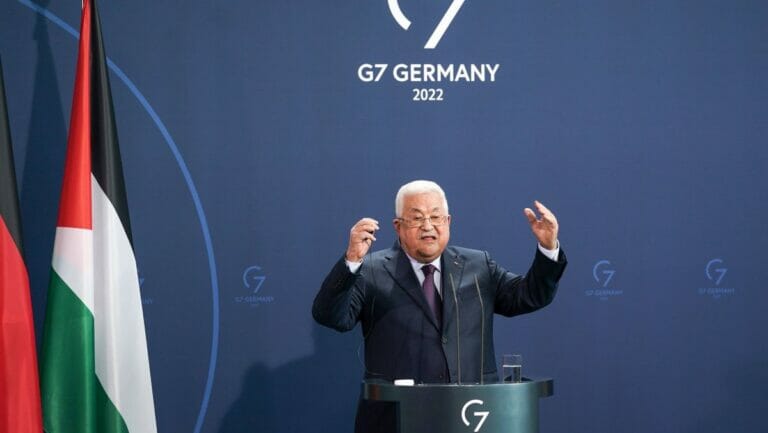
Abbas in Deutschland: Wen wundert, wenn ein Antisemit Antisemitisches von sich gibt?
Schon seine Doktorarbeit, die Mahmud Abbas 1982 an einer Moskauer Universität verfasst hat, strotzt vor antisemitischen Verleumdungen und macht die zionistische Bewegung für den Holocaust verantwortlich.
In unserem Wohnhochhaus ist 2005 Herr A. eingezogen. Herr A. ist ein Neonazi. Jeder im Haus, der es wissen wollte, hat das von Anfang an gewusst. Aber die meisten wollten es lieber nicht wissen, weil sie fürchteten, dass das »die Harmonie« stören würde. Man müsse doch zusammen unter einem Dach wohnen, da sollte man Herrn A. nicht brüskieren, haben sie gesagt.
Herr A. wirkt ja auch gar nicht wie ein Neonazi. Er trägt keine Tarnfarbenhosen, keine Springerstiefel und auch keine Bomberjacken. Er bevorzugt Anzug und Krawatte und sieht aus wie ein netter älterer Herr. Solange er nicht den Mund aufmacht, ist er eigentlich ganz okay. Manchmal freilich sagt er Sachen, die nicht ganz astrein sind. Etwa, als er meinte, Juden würden das Trinkwasser im Haus vergiften. Da waren dann schon alle ziemlich schockiert und haben sich plötzlich wieder daran erinnert, dass Herr A. ja ein Neonazi ist. Das wurde dann aber auch schnell wieder vergessen.
Schon kurz darauf wurde Herr A. wieder zu allen gemeinsamen Veranstaltungen im Haus eingeladen, und alle taten so, als wäre nichts geschehen. Alle mögen Herrn A. und das weiß er auch. Sie laden ihn immer wieder in ihre Wohnungen ein, lassen sich mit ihm fotografieren und überreichen ihm Geldgeschenke. Sie behandeln ihn wie einen Star, wie ihren Herrn, zu dem sie aufschauen. Darum sieht Herr A. gar nicht ein, dass er sich ändern muss. Zumal er schon viel länger im Haus wohnt als alle anderen. »Wenn die ausziehen, bin ich immer noch hier«, sagt er. »Die müssen sich nach mir richten. Und das tun sie auch.«
Überrascht vom Ewiggleichen
So oder so ähnlich geht es deutschen Bundesregierungen mit Mahmud Abbas, dem PLO-Chef und seit Jahren ungewählten Präsidenten der Palästinensischen Autonomiebehörde, dessen demokratische Legitimation am 9. Januar 2009 endete. Womit er sich mittlerweile im 18. Jahr seiner vierjährigen Amtszeit befindet.
Während einer gemeinsamen Pressekonferenz mit Bundeskanzler Olaf Scholz im Berliner Kanzleramt letzten Dienstag wurde Abbas gefragt, ob er sich zum 50. Jahrestag des von palästinensischen Terroristen verübten Terroranschlags auf die israelische Olympiamannschaft 1972 in München bei Israel entschuldigen werde. Das scheint auf den ersten Blick eine naive Frage: Abbas’ Fatah feiert den Mordanschlag jedes Jahr zum Jubiläum und preist die Tat als »Qualitätsoperation«. Doch die Antwort von Abbas zeigte, dass es richtig war, die Frage zu stellen und ihm Gelegenheit zu geben, seine Sicht darzulegen. Abbas sagte:
»Israel hat seit 1947 bis zum heutigen Tag 50 Massaker in 50 palästinensischen Orten begangen. 50 Massaker, 50 Holocausts.«
Nun tun im politischen Berlin alle so, als wären sie überrascht. Abbas ist 87 Jahre alt; vielleicht dachte er im Moment seiner Antwort, er sei in Ramallah. Vielleicht ist er aber auch noch ganz bei Sinnen und weiß um die antrainierte Vergesslichkeit westlicher Politiker, die ihm nie etwas nachtragen. Hatte er nicht im Juli 2016 vom EU-Parlament tosenden Applaus geerntet, nachdem er in einer Rede behauptet hatte, Juden würden Brunnen vergiften? Wörtlich sagte Abbas damals:
»Erst vor einer Woche haben israelische Rabbiner eine deutliche Erklärung abgegeben: Sie verlangten von ihrer Regierung, das Wasser zu vergiften, um Palästinenser zu töten.«
Und hatten nicht Bundespräsident Frank-Walter Steinmeier und Bundeskanzlerin Angela Merkel Mahmud Abbas 2019 in Berlin empfangen, nur sechs Tage nachdem Terroristen von Abbas’ PLO die 17-jährige Israelin Rina Shnerb mit einer Bombe ermordet hatten (ein Mord, den Abbas naturgemäß nie verurteilt hat)? Die Bundesregierung brüstete sich damals gegenüber der Presse sogar damit, der »größte bilaterale Geber« von Abbas zu sein: »Im letzten Jahr haben wir 110 Millionen Euro eingesetzt.« Das war mehr als ein Drittel der 300 Millionen, die die Palästinensische Autonomiebehörde (PA) jedes Jahr für die Ermordung von Juden ausgibt.
Holocaust-Relativierung an der Tagesordnung
Würde es in Berlin jemanden interessieren, wie die Palästinensische Autonomiebehörde regelmäßig Israelis und Nazis gleichsetzt und Israel einen »Holocaust« vorwirft, dann könnte man auch das wissen, es ist ja nicht geheim. Die Thesen, die in den Zeitungen und Fernsehsendern der auch von Deutschland finanzierten Palästinensischen Autonomiebehörde verbreitet werden, findet man auf der Website Palestinian Media Watchin englischer Übersetzung. Einige Beispiele:
- Mai 2022: »Israelische Gefängnisse sind identische Kopien von Auschwitz und den Todeslagern.«
- Mai 2021: »Israel wiederholt die Kristallnacht.« Israelische Gefängnisse »sind wie die Krematorien der Nazis«.
- April 2021: »Sie [die Israelis] machen mit den Palästinensern genau das, was Hitler mit ihnen gemacht hat. Was Eichmann mit den Juden in Österreich [sic!] gemacht hat, das machen sie, macht Naftali Bennett mit uns, genau das. Sie haben die Erfahrung kopiert.«
- Februar 2021: Netanjahu ist »das hässliche Gesicht von Mussolini und Hitler«.
Auf Facebook verbreitete Abbas’ Fatah-Partei im Jahr 2019, Juden hätten es aufgrund ihres angeblichen Charakters verdient gehabt, im Holocaust getötet zu werden. Mahmud Abbas selbst hat mit seiner Holocaust-Deutung auch in Deutschland schon Schlagzeilen gemacht, wenn auch sehr selten. Im Mai 2018 sagte er:
»Vom elften Jahrhundert bis zum Holocaust, der in Deutschland stattgefunden hat, waren jene Juden, die nach West- und Osteuropa zogen, alle zehn bis fünfzehn Jahre Massakern ausgesetzt.«
Die Ursache der »Massaker«, so Abbas, sei »deren soziale Funktion im Zusammenhang mit Banken und Zinsen« gewesen. Weiters behauptete Abbas, Hitler habe die Einwanderung der Juden nach Palästina unterstützt. Sogar die Deutsche Welle hat damals unter der Überschrift »Abbas’ Aussagen zum Holocaust sorgen für Entsetzen« davon berichtet. In dem DW-Bericht hieß es:
»Adolf Hitler habe die Einwanderung von Juden ins historische Palästina durch einen Deal zwischen dem deutschen Wirtschaftsministerium und der Anglo-Palestine Bank unterstützt, sagte Abbas in der Rede. Dadurch hätten Juden bei der Einwanderung all ihr Vermögen durch die Bank mitnehmen können.«
»Wer ist Mahmud Abbas wirklich?«, fragte das Magazin Cicero schon im August 2005. In dem Artikel wurde aus Abbas’ Doktorarbeit zitiert:
»Die zionistische Bewegung gab jedem Rassisten der Welt, angeführt von Hitler und den Nazis, die Erlaubnis, die Juden nach Gutdünken zu behandeln, solange die Einwanderung nach Palästina gewährleistet wurde. […] Zusätzlich zur Ermutigung der Verfolgung der Juden, damit diese ins Heilige Land emigrierten, wollten die Zionistenführer auch, dass Juden ermordet würden, weil mehr Opfer zu haben bedeutete, größere Rechte und stärkere Privilegien am Verhandlungstisch zu bekommen. Die Zionisten mussten die Zahl der Opfer erhöhen; mit diesen konnten sie dann bei der Abrechnung prahlen.«
Gaskammern, so Cicero, »finden in der Dissertation von Mahmud Abbas keine wahrhaft wissenschaftliche Würdigung. Es habe sie nicht gegeben. Abbas zitiert eine ›wissenschaftliche Studie‹ hierzu, die der französische Holocaust-Leugner Robert Faurisson erstellte.«
Der Cicero-Autor (dessen Name auf der Website nicht genannt wird) erinnerte auch daran, dass Abu Daoud, der Drahtzieher des Olympia-Massakers von München, in seiner Autobiografie schrieb, Mahmud Abbas sei als Schatzmeister der PLO direkt in die Anschlagplanung des Schwarzen Septembers eingebunden gewesen:
»In seiner Autobiografie ›Palästina: Von Jerusalem nach München‹ bezeichnet er Mahmud Abbas als ›den Finanzier unserer Operation‹. Abu Daoud will sich daran erinnern, wie Arafat und Abu Mazen [Kampfname von Mahmud Abbas; Anm. Mena-Watch] ihm Glück wünschten und ihn küssten, als er sich daranmachte, den Anschlag von München zu planen.«
Antisemtische Doktorarbeit
Auch der in den USA geborene israelische Soziologe, Sozialarbeiter und Journalist David Bedein – als wichtigster Beobachter und Kritiker des Palästinenserhilfswerks UNRWA ein häufiger Gesprächspartner von Mena Watch – hat Abbas’ Dissertation gelesen und sie 2011 in einem Artikel kommentiert. Einige wichtige Punkte aus Bedeins Beitrag:
- Der Titel von Abbas’ Doktorarbeit lautet »Zionistische Führung und die Nazis«. »Darin befasst sich Abbas mit ›den geheimen Verbindungen zwischen den Nazis und der Führung der zionistischen Bewegung‹«, so Bedein.
- Die Dissertation wurde 1982 in Moskau am Patrice Lumumba Institute for Oriental Studies verfasst. »Dieses Institut wurde von Yevgeny Primakov geleitet, einem Juden, Arabisten, Verbündeten von Saddam Hussein und anderen arabischen Herrschern und späteren [von 1998 bis 1999; Anm. Mena-Watch] Premierminister von Russland«, so Bedein.
- »Abbas behauptet in seiner Arbeit, dass die zionistische Führung daran interessiert gewesen sei, die Welt davon zu überzeugen, dass eine große Anzahl von Juden während des Krieges getötet wurde, um nach dem Krieg ›größere Gewinne zu erzielen‹ und ›die Beute aufzuteilen‹.«
- Abbas’ Doktorarbeit, so Bedein, wolle »tatsächlich Zweifel aufkommen lassen, dass Gaskammern verwendet wurden, um Juden zu töten«. »Abbas geht so weit zu behaupten, dass Gaskammern nicht verwendet wurden, um jemanden zu töten, sondern nur, um ihn zu desinfizieren und Körper zu verbrennen, um Krankheiten vorzubeugen.«
- »Abbas’ zentrales Thema ist, dass die zionistische Bewegung und ihre verschiedenen Zweige Hand in Hand mit den Nazis gegen das jüdische Volk gearbeitet und mit ihnen bei der Vernichtung der Juden kollaboriert hätten.«
Von Mena-Watch um einen Kommentar zu Abbas’ jüngsten Äußerungen gebeten, schreibt Bedein per E-Mail:
»Abbas’ Kommentare zum Holocaust, die er in Berlin getätigt hat, machen deutlich, dass es an der Zeit ist, zu fordern, dass Abbas seine Doktorarbeit aus den Schulen und Bibliotheken der Palästinensischen Autonomiebehörde und der UNRWA entfernt.«
Zudem müsse Abbas »die These seiner ›akademischen‹ Arbeit widerrufen und verurteilen, wonach die zionistische Bewegung für den Holocaust verantwortlich gewesen sei«. Für »jede Nation«, so Bedein weiter,
»ist die Zeit gekommen, Wirtschaftshilfe an die PA und die UNRWA an die Forderung zu knüpfen, dass die PA und die UNRWA ihren Krieg gegen die Juden einstellen, den sie über ihre Schulen, Kunst- und Jugendklubs führen. Es ist an der Zeit, dass alle Gebernationen die UNRWA auffordern, Waffen- und Munitionsinspektionen an allen PA- und UNRWA-Schulen durchzuführen und Jugendbanden zu entwaffnen, ein für alle Mal. Es ist an der Zeit, dass die UNRWA in Übereinstimmung mit den Prinzipien der Vereinten Nationen und nicht in Übereinstimmung mit dem Diktat terroristischer Organisationen handelt.«
Blowin’ in the wind
Readers of a certain vintage will remember this popular song released in 1963 and top of the hit parade for some time.
One definition I came across explained that “blowing in the wind” means “to be thought about and discussed but not decided upon or resolved.”
This succinctly sums up the current state of chaos and indecisive action on the part of most democracies as they face an increasing onslaught on their freedom, liberties and human rights.
Even more explicit are these lyrics taken from the song:
“How many times can a man turn his head?
Pretending that he just doesn’t see.
The answer my friend is blowin’ in the wind…….”
If you want to know exactly how vacillating political leaders and their advisers are, just take note of the multitude of examples. The spectacle of commentators, experts and those elected to lead turning their heads and pretending not to see the looming threats is enough to make any sane individual despair.
In Iran, the followers of Baha’i are being singled out again for persecution, incarceration, torture and death. This is not a new phenomenon, yet the silence of religious and lay leaders alike is deafening.
Salman Rushdie is stabbed by someone with ties to Iran yet the Biden Administration and the EU turn their heads. The height of hypocrisy is issuing meaningless “slap on the wrist” expressions of outrage while hurtling full speed toward an agreement that will guarantee Iran’s acquisition of weapons of mass destruction and the means to deliver them. Yet this is precisely the scenario being enacted in front of our very eyes by those who prefer to turn their heads. Presumably, when Iran has extracted the maximum number of concessions from those peddling appeasements of terror regimes, Israel will be expected to fall into line.
Taiwan officials have declared that the Communist Chinese armed forces are practising for an eventual invasion. Pentagon experts stated in response that this is “fantasy.” This deliberate denial of reality is an eerie resemblance to American slogans that they will not let Iran acquire nuclear capability when the Iranians themselves have already boasted that they can assemble an atomic bomb.
The Chinese Ambassador to Australia is reported by news media to have stated that “the anticipated Taiwan action will be a takeover and not an invasion. It will be a reunification and a coming back to the motherland.” Can their intentions be any clearer?
The reactions of the democracies are as clueless as their responses to the agenda of the PA and all their terror-supporting friends. In the face of Abbas in Ramallah praising the murder of Israelis and paying stipends and pensions to the murderers, Israel is urged to agree to the establishment of a terror State in the heart of our country. The expressions of fake sympathy gushing forth when pregnant Israeli mothers and their children are murdered are negated by their silence in the face of any democracy or respect for human rights in the PA and Hamas-controlled Gaza.
It is no wonder, therefore, that most sane Israelis shake their heads in amazement when the UN Ambassador for Middle East “peace” burbles that “cycles of violence will only stop when an independent Palestinian State lives side by side with Israel”.
This week marks the anniversary of the 1929 mass massacre by Arabs of Jews in Hebron, Jerusalem and Safed. To commemorate this act of terror, the Palestinian Authority lauded and honoured the memory of the perpetrators, calling them heroes. What further proof of the futility and insanity of embracing these people as peace partners can be provided? Yet, despite all the evidence, the UN and all our fellow leftist lemmings persist in turning their heads and ignoring the foul stench blowing in the wind.
In Germany of all places, Abbas stood alongside the German Chancellor and not only refused to apologise for the PLO massacre of Israeli Olympic sportspeople fifty years ago but brazenly accused Israel of having perpetrated numerous “holocausts” against Palestinian Arabs since 1947. The German Chancellor grimaced but did not walk out or immediately denounce this blatant lie. He instead shook the liar’s hands. Only when uproar ensued did he try to wriggle out of his non-reaction. As for Abbas, the firestorm of condemnation obviously caught him on the back foot but his subsequent weasel words merely highlighted his hypocrisy.
The continuing embrace of this “leader” is a perfect example of not wanting to face real truths.
Years of weak appeasement have resulted in North Korea now menacing its neighbours with impunity. The warm embrace of this rogue regime by Russia, China, Iran and the “peace-loving” PA in Ramallah illustrates the dismal failure to confront terror and points to a disastrous calamity facing us.
The ex-Al-Jazeera chief tweeted that the “same killer is behind the deaths of Jesus and Palestinians.” He quickly deleted this tweet once it was exposed but one wonders where the uproar over this blatant Jew hate was. It’s obviously another case of ignoring noxious odours carried in the wind.
The fastest growing “religion” these days, especially in the USA, is the climate change denomination. Among its most fanatic followers are supporters of the Democratic Party, and as over 70% of American Jews vote for them, they are overwhelmingly represented among this new secular faith. There is nothing wrong, of course, with being concerned about protecting the environment but somehow the proponents of climate change have turned it into some sort of obsessive compulsion which is taking over people’s lives. Every disaster, whether natural or man-made, is now attributed to climate change and the apocalyptic prophecies multiply by the day.
Lost in all this hysteria is the fact that ever since humanity inhabited planet earth, there have been climatic dramas. The flood at the time of Noah plus subsequent cycles of ice ages and heat waves all occurred before fossil fuel became the bogeyman it has become today.
Protecting this planet of ours is, without doubt, an important mitzvah of Judaism but it does not trump our obligation to survive as Jews. That is why when reading a report sourced from JTA (Jewish Telegraphic Agency) it occurred to me that somehow American Jewry, or at least large parts of it, has been hijacked by climate change hysteria to the exclusion of anything else.
This report summary stated that “American Jews rank climate change above all other problems.” It seems from previous surveys that a far bigger percentage of American Jews believe climate change is a concern than any other group of Americans.
One would think that concerns about Israel, Judeophobia and increasing assimilation would be of equal if not greater concern. Unfortunately, this is not the case among non-Orthodox affiliated Jews. A study published by the Jewish People Policy Institute (JPPI) found that only one-third of Jewish people under the age of 30 in the USA find it very important for their grandchildren to be Jewish as well. Among young Jewish Democrats, support for Israel falls to only 48%. According to the policy think tank, many young American Jews lack a religious or national bond to Judaism and only view it from a cultural perspective.
Tikkun Olam has superseded most other mitzvot for progressive American Jews and is inexorably leading to a Jewish change far more dramatic and long lasting than climate change.
“How many times can we turn our heads
Pretending that we just don’t want to see?
The answers my friends, are blowing in the wind…”
A new film about Shimon Peres whitewashes the consequences of his policies
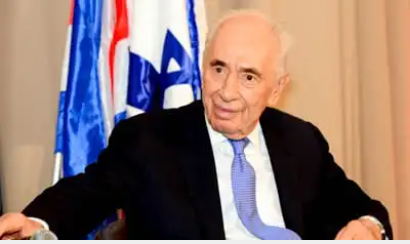
This essay is dedicated to the 1,409 men, women and children who were murdered as a result of the Oslo process, which involved unilateral concessions to an unrepentant terrorist organization, a policy conceived by Israeli politician Shimon Peres, who died in 2016 at the age of 93.

President Shimon Peres Photo: Henry Benjamin
Instead of falling into disgrace, Peres’s memory now basks in the glory of the new film “Never Stop Dreaming: The Life and Legacy of Shimon Peres,” slated for distribution by Netflix to 190 nations.
The Peres movie launch coincided with renovations to the Jerusalem Convention Centre, to be renamed for Peres next August on the 100th anniversary of his birth. A “Peres Convention Centre” will undoubtedly screen the new Peres movie with a transparent purpose: to promote the agenda of Shimon Peres.
Full disclosure: I knew Peres and worked for him as a foreign press aide during the 1992 Israeli election. I was later involved in news coverage of Peres for the Makor Rishon newspaper and periodicals abroad.
Viewers of the new film, especially those who live outside of Israel, cannot perceive the depths of distortion that its research team fell into, wittingly or unwittingly.
The movie begins with the state funeral accorded to Peres, who served as president, prime minister, foreign minister and defence minister of Israel. The movie claims that this was one of the largest funerals in Israel’s history but did not mention that the Peres Centre for Peace chartered buses to the event. Moreover, larger funerals were conducted for two assassinated Israeli officials, Prime Minister Yitzhak Rabin and Tourism Minister Rehavam Ze’evi, which needed no chartered buses.
The movie recounts the key role that Peres played in achieving a peace accord with Yasser Arafat and the Palestinian Liberation Organization, without mentioning the fact that the PLO never ratified the accord, even though Peres dispatched Deputy Foreign Minister Yossi Beilin to thank Arafat for allegedly doing so.
The movie also does not include the role that Peres played in convincing the public that the PLO had changed its covenant in order to remove the clause pledging to destroy Israel, which never happened.
While lauding Peres for receiving the Nobel Peace Prize, the film ignores well-publicized documentation that the Peres Center provided a member of the Nobel committee with a $1.2 million gratuity in order to secure the prize for Peres.
The movie does note that Peres lost his first bid for the Israeli presidency without mentioning the financial scandals that rocked the Peres Center and caused his defeat. Also ignored is the fact that Peres reassumed a cabinet position only after the Knesset Ethics Committee forced him to divest himself of holdings in the leading Palestinian Authority communications firm.
Even though Peres conceived of the ill-fated idea of arming PLO security forces, the movie does not mention that those PLO forces wound up absorbing terrorist groups that have attacked Israel.
This begs the question: Why did the producers of this movie not interview even one relative of those murdered by Arab terrorists as a result of the failed peace process conceived by Peres? Moreover, why did the movie’s producers not challenge the central idea of the Peres peace process: That you can create an incentive for the PLO to abandon terror?

David Bedein
Why did the movie not challenge the misrepresentations that Peres advanced? For example, on Jan. 1, 2000, Peres assured a Jewish media conference that the PLO had adopted an educational curriculum advocating peace. When I told Peres that our news and research agency had examined all P.A. schoolbooks and found that they contained not a word of peace, Peres stepped away from the microphone and said, “I know.”
Israel advocates will have to contend in the years to come with renewed sympathy and support for the policies conceived by Peres and promoted by this movie, which hallows the memory of a man who transformed the image of a lethal terrorist organisation into that of an advocate of peace and reconciliation.
Nonetheless, Peres, Rabin and Arafat got the Nobel Peace Prize. A hard act to follow.
On the wall of my office hangs a composite picture of hundreds of people who were murdered by Palestinian terrorists during the Oslo process. Having covered many of their funerals, I feel an obligation to the families of the victims of the peace process to challenge the honour bestowed on Shimon Peres by this new movie. It leaves uninformed viewers assuming that Peres should be seen as a guardian of peace, not a protector of terror.
But the time has come to document the consequences of the policies Peres advocated and their human cost.
Behind the scene with David Bedein – August 19, 2022
Behind the scene with David Bedein – August 19, 2022
Berlin police investigate Abbas’ Holocaust comments

[In case a criminal investigation opens against Abbas in Israel, senior sources in the Israel law enforcement system have clarified to the Bedein center hat Abbas has no immunity against prosecution in Israel] – David Bedein
Berlin police have opened a preliminary investigation against Palestinian President Mahmoud Abbas over his comments this week that Israel had committed “50 Holocausts” against Palestinians.
The remarks, during a news conference in Berlin alongside German Chancellor Olaf Scholz, sparked outrage in Germany, Israel and beyond.
Police confirmed a report Friday by German daily Bild that Abbas was being investigated for possible incitement to hatred after receiving a formal criminal complaint. Downplaying the Holocaust is a criminal offense in Germany, but the opening of an preliminary inquiry doesn’t automatically entail a full investigation.
Germany’s Foreign Ministry said that Abbas — as a representative of the Palestinian Authority — would enjoy immunity from prosecution because he was visiting the country in an official capacity.
Germany doesn’t recognize the Palestinian Territories as a sovereign state, a position Scholz reaffirmed Tuesday.
Ten talking points for UNRWA donor Nations
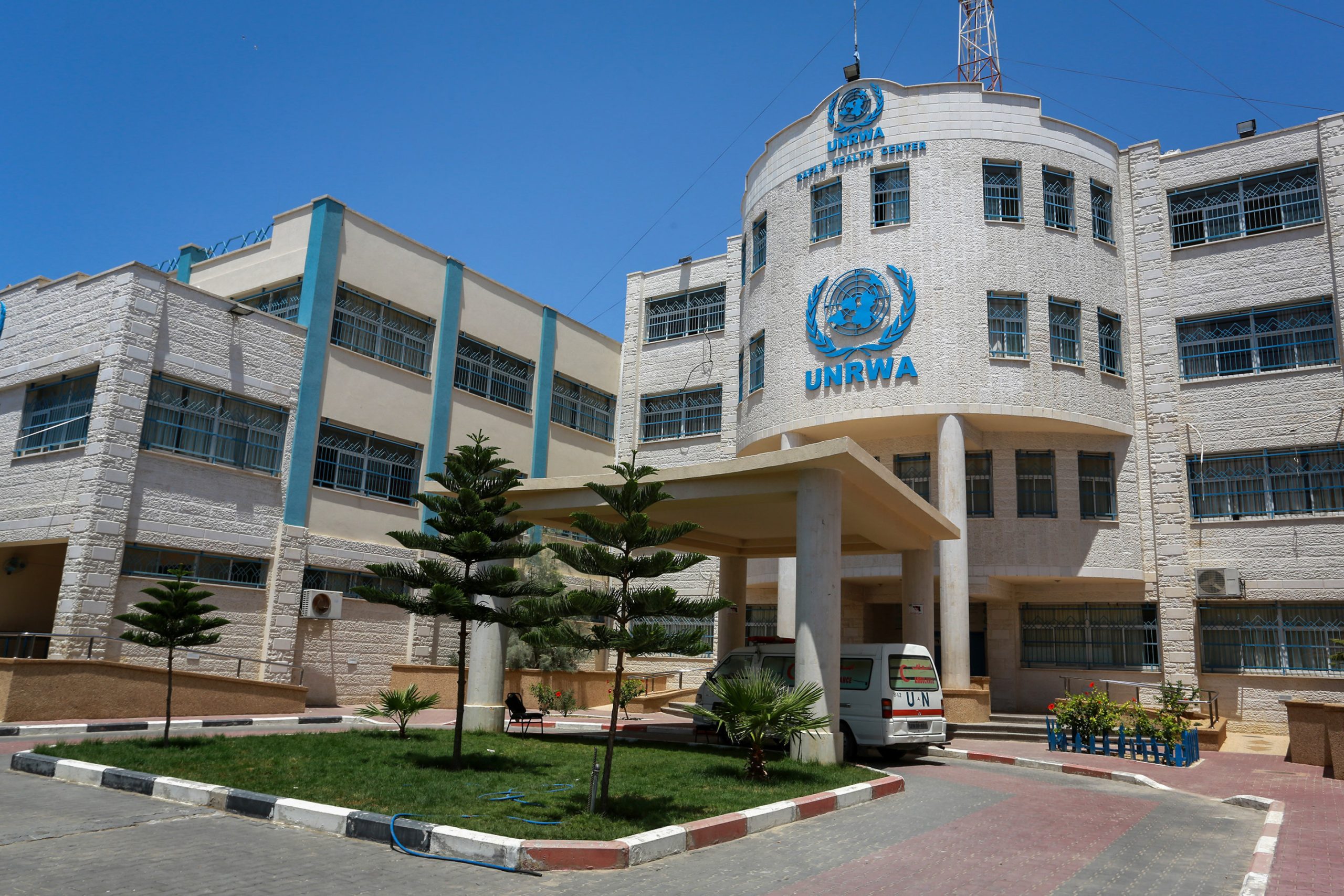
View of the United Nations Relief and Works Agency (UNRWA) building during a strike in Rafah in the southern Gaza Strip, on July 26, 2018. Photo by Abed Rahim Khatib/Flash90 *** Local Caption *** אונר"א
עזה
בניין
שביתה
A German academic asked for advice from the Nachum Bedein Center for Near East Policy Center as to how he could influence UNRWA policy. His concern was motivated by Germany’s increasing its donation to UNRWA, with little accountability. Here is a list of donors to UNRWA: https://www.unrwa.org/how-you-can-help/government-partners/funding-trends
Here is the advice that we gave to our colleague from Germany:
From six meetings that our news and research agency have conducted at the office of the UN Secretary General, since 2017, whose staff advises rstand that the UN holds UNRWA donor nations accountable for policies carried out by UNRWA, whose $1.6 billion dollar budget is rarely monitored.
These were ten talking points UNRWA policy discussion.
1. Replacing UNRWA is not on the agenda. Only the UN can do that.
2.Removing anti-semitism from UNRWA policy is on the agenda.
3. Deleting UNRWA texts which present murderers as a role model is on the agenda.
4. Taking down maps from UNRWA schools which obliterate Israel is on the agenda
5. Conducting inspections of UNRWA facilities for weapons and munitions is on the agenda
6. Removing placards from UNRWA schools which call to murder Jews is on the agenda.
7. Requesting accountability for all cash transfers to UNRWA is on the agenda.
8. Deleting the slogan “right of return by force of arms” from UNRWA is on the agenda.
9. Monitoring UNRWA for alleged narcotics trade is on the agenda.
10. Surveying UNRWA facilities for evidence of sex trafficking is on the agenda.
‘Operation Breaking Dawn’ was a mixed bag
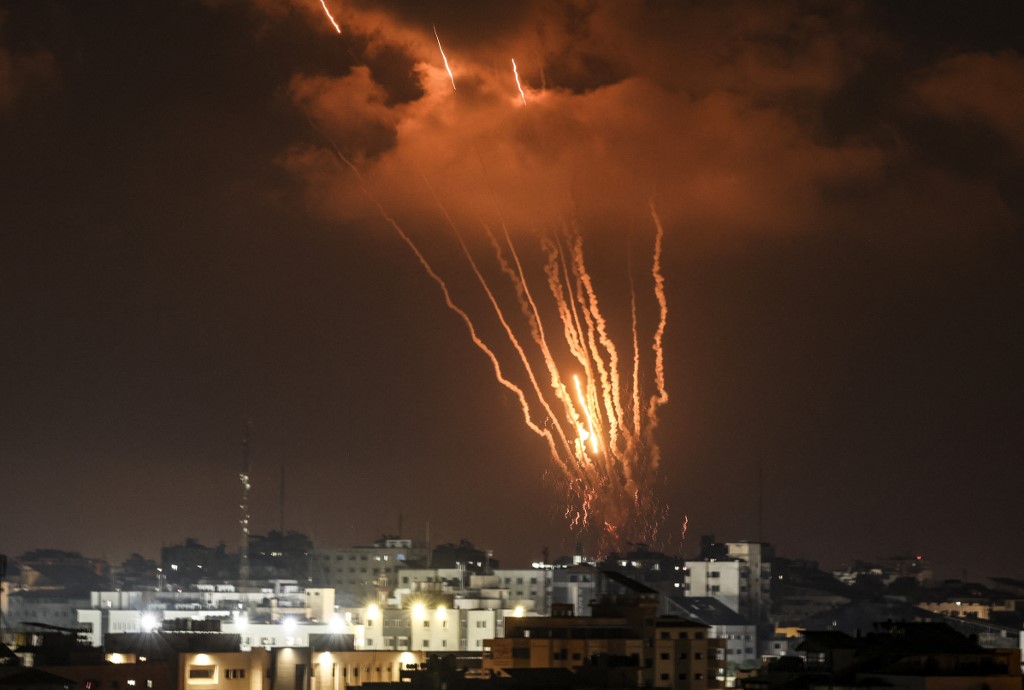
A picture taken on August 5, 2022, shows Palestinian rockets fired from Gaza City in retaliation to earlier Israeli air strikes. - A senior militant from Islamic Jihad was killed in an Israeli air strike on the Gaza Strip today, prompting the militant group to warn Israel has "started a war".A child was among those killed in the strikes, the enclave's health ministry said, while Israel's military estimated 15 were dead. (Photo by MAHMUD HAMS / AFP)
As we look back over the past few weeks, it is exceedingly important to avoid drawing hasty conclusions about the outcome of Israel’s brief conflict with Palestinian Islamic Jihad (PIJ) in Gaza. When we ask whether anything truly changed, we must guard against conclusions based on superficial impressions.
The first question to ask is whether “Operation Breaking Dawn” signals that Prime Minister Yair Lapid, usually noted for his naiveté, has grown in office.
The operation did see some astounding successes. Lapid and Defense Minister Benny Gantz talked tough and followed through. Israel did not only take out PIJ installations but also decimated the PIJ leadership. Lapid was on board for this and should get the credit. However, the situation is not quite as simple as it appears.
For example, how much credit should Lapid actually get for the successful outcome of the operation? There are two security/military elements that fell into place during the conflict. One was the extraordinary intelligence provided by the Shin Bet. The other was the remarkable accuracy of our missiles, which made it possible to execute pinpoint hits on PIJ leaders.
The plan to execute the PIJ leadership took several months to refine. It was most certainly being shaped before Lapid became prime minister, and quite likely before his predecessor Naftali Bennett took office.
In a democracy, the political echelon makes the military decisions. Lapid and Gantz met the challenge when the possibilities were presented and gave the order to go ahead with the plan. But Lapid did not go to the IDF and request a plan for hitting PIJ. It was the reverse: The IDF informed him of what they were now capable of. Clarity on this is important.
In the euphoria of the first days after the operation, it was said that PIJ was finished for some time to come. But I see a great deal of uncertainty. Arabs have an honor-shame culture and do not tolerate defeat particularly well. Thus, there is the possibility of a PIJ strike to restore their sense of honor. Certainly, PIJ might simply make a good deal of noise and not follow through. But if they are to attack again, they require a rationale, which will most likely be the terms of the ceasefire that ended the operation.
According to PIJ, Israel agreed to release two prisoners: Khalil Awawdeh, a hunger-striker, and Bassem al-Sa’adi, whose detention in Jenin triggered the escalation. Israel adamantly insists that there was no such agreement. However, the Egyptians, who negotiated the ceasefire, said they would make their best effort to get the terrorists released. PIJ appears to see their release as the final phase of the ceasefire.
This week, a delegation from Egypt is due in Israel. It is imperative for Israel to stand up to Egyptian pressure and refuse to make concessions to keep Gaza quiet. To do so would significantly undermine recent achievements.
Lastly, we must consider the role Hamas played in the operation. Still smarting from its conflict with Israel in May 2021, Hamas preferred to avoid involvement. Israel was also reluctant to take on Hamas, so it carefully avoided hitting Hamas installations, which would have triggered a response.
Some analysts congratulate Israel for weakening PIJ without taking on Hamas. Others have criticized it, because Hamas, the strongest terror group in Gaza, has been further strengthened by the weakening of PIJ. The May 2021 ceasefire with Hamas stipulated that it was responsible for maintaining quiet in Gaza. Hamas failed to honor this commitment and Israel did not respond. Israeli policy in the past has been to hold Hamas responsible for any rocket fire from Gaza. Now this principle has been abandoned.
As for Lapid, the day after the operation ended, he sent a message to the residents of Gaza: “We also know how to provide work, livelihood and a life of dignity to anyone who wants to live in peace by our side. … The choice is yours.”
It appears, then, that Lapid has not changed. Having indirectly strengthened Hamas, does he really believe that the people of Gaza can overthrow their repressive leaders in favor of a life of dignity and economic advancement? Or perhaps he was speaking indirectly to the leaders of Hamas, fantasizing that he might persuade them to moderate in exchange for economic benefits, which he has already begun to increase.
It is certain that Hamas has not changed, whether Lapid understands this or not. Their reluctance to join the fight did not signal moderation but self-preservation. They are playing it smart, amassing their weapons and making plans for whenever the time is right.
Weekly Commentary: Policy Debate Over Honoring Rocket Launcher Human Shields Requires Data Not Released To Public
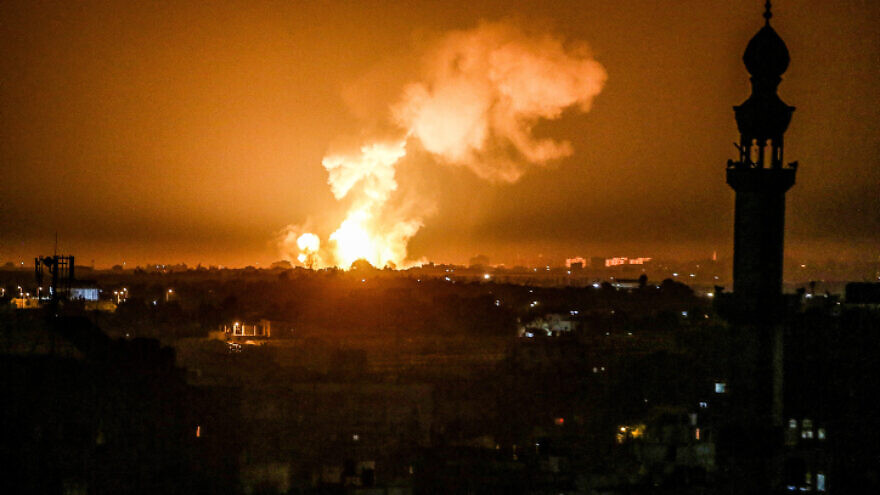
A ball of fire and smoke rises during Israeli airstrikes in Khan Yunis, in the southern Gaza Strip on January 2, 2022. Photo by Abed Rahim Khatib/Flash90 *** Local Caption *** ???
????? ???
????????
?????
????? ???????
??? ????
????
There is some basic information we need before seriously addressing whether
Israel should repeat the policy it followed in Operation Breaking Dawn of
not stopping rocket launchers who have civilians with them in future
clashes.
Israeli defense officials maintain that when we declined to attack someone
engaged in launching a rocket towards Israel because of the presence of
civilians that we could catch up with them when civilians were not around.
So we apparently have extremely rich data about the individuals who launched
rockets in Operation Breaking Dawn and can thus readily simulate what would
have happened if these individuals had been killed either before or after
they launched their first round.
I will take the two extreme cases:
#1 Each set of rockets was launched by a rocket team which only launched
that set, so killing that team would have only the possibility of stopping
that particular set of rockets being launched.
#2. All the sets of rockets launched in Gaza were launched by one rocket
team so that killing the members of that team as the first rockets were
being launched would have stooped all rockets launching against the Jewish
State from Gaza.
Of course the truth is somewhere between #1 and #2.
And while Hamas may not run its launching operations exactly as Islamic
Jihad does the lessons drawn from the simulation will certainly help to give
us an indication of just how much it “costs” us when we honor human shields.
The key consideration when considering ignoring the presence of human
shields protecting rocket teams is “proportionality” so the proper
estimation of the “benefit” of killing a rocket team is critical.
I suspect that we will find that killing one rocket team could have
prevented at least three additional rounds of launchings even during the
short duration of Operation Breaking Dawn.
Armed with the information from the simulation we might very well come to
the conclusion that in a conflict with Hamas, with it magnitudes greater
firepower, that the proper policy is to ignore the presence of human
shields protecting rocket teams.
________________________________________
IMRA – Independent Media Review and Analysis
Since 1992 providing news and analysis on the Middle East with a focus on
Arab-Israeli relations
Website: www.imra.org.il
Abbas skirts apology for Munich attack, blames Israel for ‘Holocausts’

Palestinian President Mahmoud Abbas expressed no regret Tuesday for the deadly attack by Palestinian militants against Israeli athletes at the Munich Olympics half a century ago, countering that Israel had committed “Holocausts” against Palestinians over the years.
Click here to read full article


