 Czech
Czech French
 German
 Hebrew
 Noruegan
 Russian
 Spanish
 Swedish
 Polish
 Portuguese



We’ve all heard about what’s taking place in Iran, where young women are pushing back against the regime that is punishing them for not wearing proper head-coverings.
Is that the only way to run a country with religious morals? Can the land of Israel ever be a Jewish State? Is it stuck working on being a democracy?
A very unpopular truth about Israel
Double cross
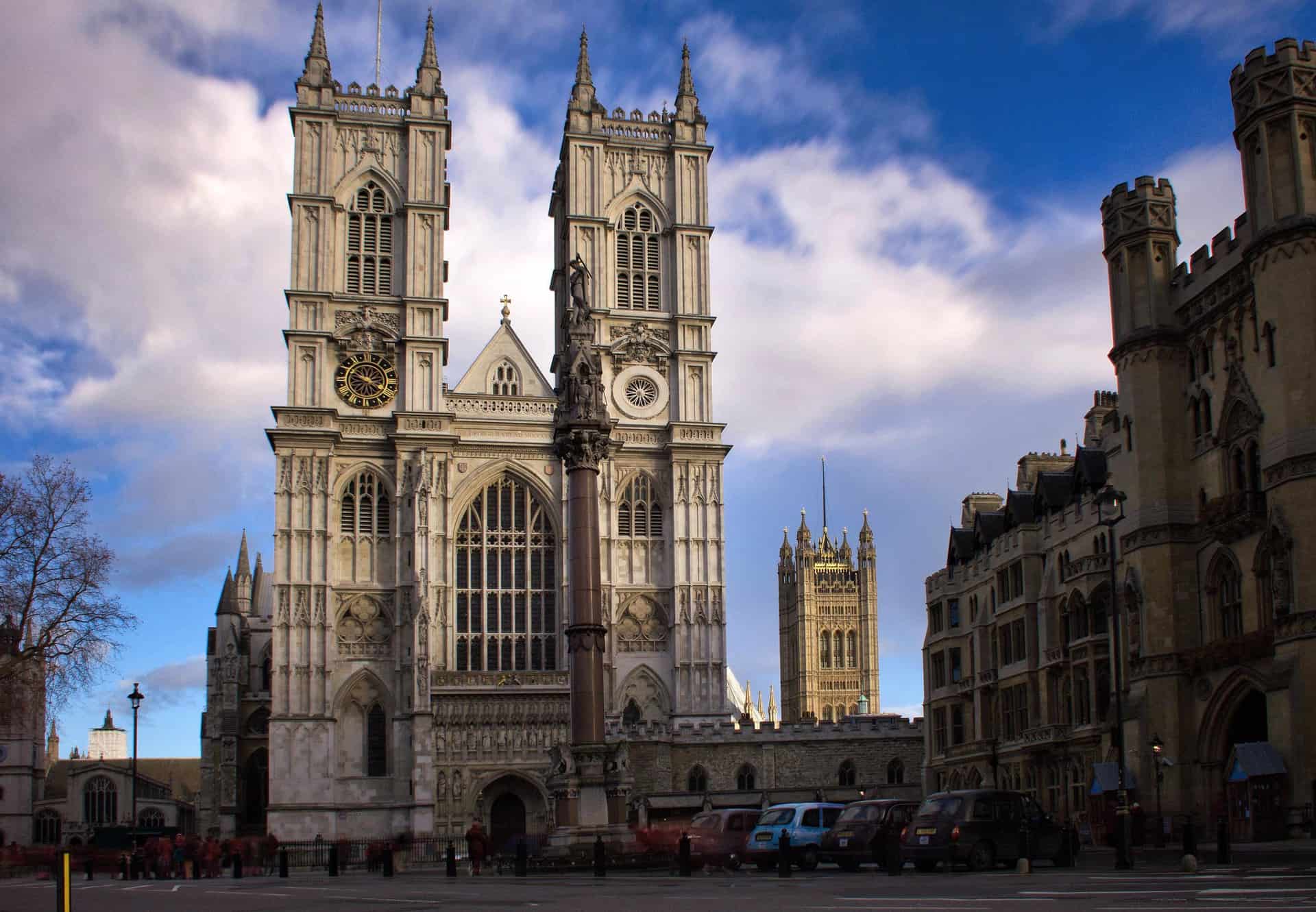
Perfectly timed for the commencement of the Feast of Tabernacles (Sukkot), the heads of the United Kingdom Anglican and Roman Catholic Churches revealed their true agenda.
Whether one calls it a case of “true confessions” or “immaculate deceptions” the plain truth is that behind all the interfaith expressions of friendship, there dwells a residual and inescapable denial of the authentic relationship between the Jewish People and the city of Jerusalem.
Although this does not come as any surprise to those with any knowledge of Christian/Jewish relationships during the last two thousand years, this latest revelation still burst like an unexpected pronouncement among Jewish communal leaders lulled into believing that revisionist theologies had been consigned to the best-forgotten past.
Although masses of Christians now acknowledge the irrefutable connection between the Promised Land and the Holy City with the Jewish People, it seems that the Anglicans, the World Council of Churches and the Vatican still cannot reconcile themselves to this fact. Christian Zionists are vilified and delegitimize, which makes one wonder whether the next step is branding Jesus as an illegitimate “settler.” The PA has already claimed him as the first “Palestinian” martyr, and this nonsense naturally percolates down to the ignorant via local Church statements.
What shattering event precipitated these latest edicts from the Archbishops of Canterbury and Westminster?
As I predicted in my last op-ed, the new UK Prime Minister’s offer to investigate moving the embassy from Tel Aviv to Israel’s Capital would unleash a firestorm of outrage.
So it has come to pass with all the usual suspects lining up to vent their venom at the idea of an investigation, let alone any sort of actual implementation. Included in the choir of righteous protesters are the Labour Party, Liberal Democrats, sections of the media, Islamic groups, self-professed guardians of human rights and, of course, representatives of some Christian denominations.
Unsurprisingly, not to be left out are also some Jewish protesters who never miss an opportunity to malign the Jewish State as well as self-declared “Zionists” such as the Reform Movement who are terrified that moving to Jerusalem will destroy a peace process that is already dead in the water.
The opposition of the British Foreign Office is a given, especially when one understands that this is a long-standing stance.
Some people are mystified as to why the Archbishops of Canterbury and Westminster are also jumping on the bandwagon. In actual fact, there is no mystery involved.
As far as the Roman Catholic Church is concerned, the issues are crystal clear. The Vatican has never really reconciled itself to the fact that one of the main pillars of its theological doctrines has been demolished. With the re-establishment of Israel and the return of Jews from far-flung parts of their dispersion, the dogma that Jews are eternally punished for something that may have happened two thousand years ago is no longer valid. They may, in recent times, have recanted this malignant theological belief, but obviously, it was either a charade or someone has let the proverbial cat out of the bag.
It was only in 1993 that the Vatican was forced to acknowledge reality and extend official recognition of Israel. However, conveniently overlooked by those rejoicing this decision was the awkward truth that the Roman Catholic Church still refuses to accept the fact that Jerusalem is once again restored to its rightful status as the political and religious centre of the Jewish People. Despite years of interfaith fraternity and mutual expressions of tolerance, the “elephant in the room” was never addressed.
With the British PM’s declaration to “investigate” shifting its embassy, the head of the Roman Catholic Church in the UK has made it clear that the Vatican’s eternal desire to wrest Jerusalem away from the Jews and turn it into an internationally controlled city is very much alive and well. After Abbas, the PA life President and Abdullah, the Hashemite Monarch, spouted vile lies at the UN General Assembly and accused Israel of heinous crimes against Christians, it was only a matter of time before major Christian denominations jumped on the bash Israel bandwagon.
As far as the head of the Anglican Communion is concerned, his opposition to Jerusalem is also according to a well-honed script. The Israel-based representatives of the Church of England have, over many years, together with the heads of the Roman Catholic and Orthodox Churches, toed the Islamic party line. Ignoring the inconvenient fact that Christians are a diminishing minority in the PA, Gaza and other Arab Islamic countries and that only in Israel have Christians increased in numbers, these Church leaders continue to parrot the fables churned out by Ramallah and elsewhere. Years of Jew bashing means that accusing Israel of original sin is a natural daily exercise in truth perversion.
In order to placate and curry favour with those preaching against Israeli control of Jerusalem, the Archbishop of Canterbury obviously feels compelled to join the choir. Where this leaves interfaith dialogue is an interesting conundrum. The UK Chief Rabbi and the Archbishop of Canterbury are “buddies” of long-standing. Will the Chief Rabbi make it abundantly clear that Jerusalem is not up for sale and internationalization, or in classic British stiff upper lip style, will the outrageous statements of the Christian clerics be swept under the carpet?
Coincidentally or perhaps by some divine plan, Israel has welcomed two thousand Evangelical Christians who have travelled from many countries to be here for the Feast of Tabernacles. They will be marching with bands, banners and joyful songs through the streets of Jerusalem, proclaiming their fervent belief that Jerusalem is the eternal and undivided Capital of the Jewish nation. It is true that they also have an alternative religious agenda which often conflicts with expressions of unconditional love and support.
As Jews from all over the world and locals make their pilgrimage to Jerusalem during Sukkot and gather at the Kotel, the prophecy of Zechariah is being fulfilled in our time.
Not all Christians have been seduced by the revisionist theologies which seek to sever the connection between Jews, their Land and their Holy City.
It is time that they made their collective voices heard loudly and clearly.
Meanwhile, don’t hold your breath that the UK Government will actually make the trek to Jerusalem.
Israel can’t rely on PA to stop West Bank-based Lion’s Den terror group
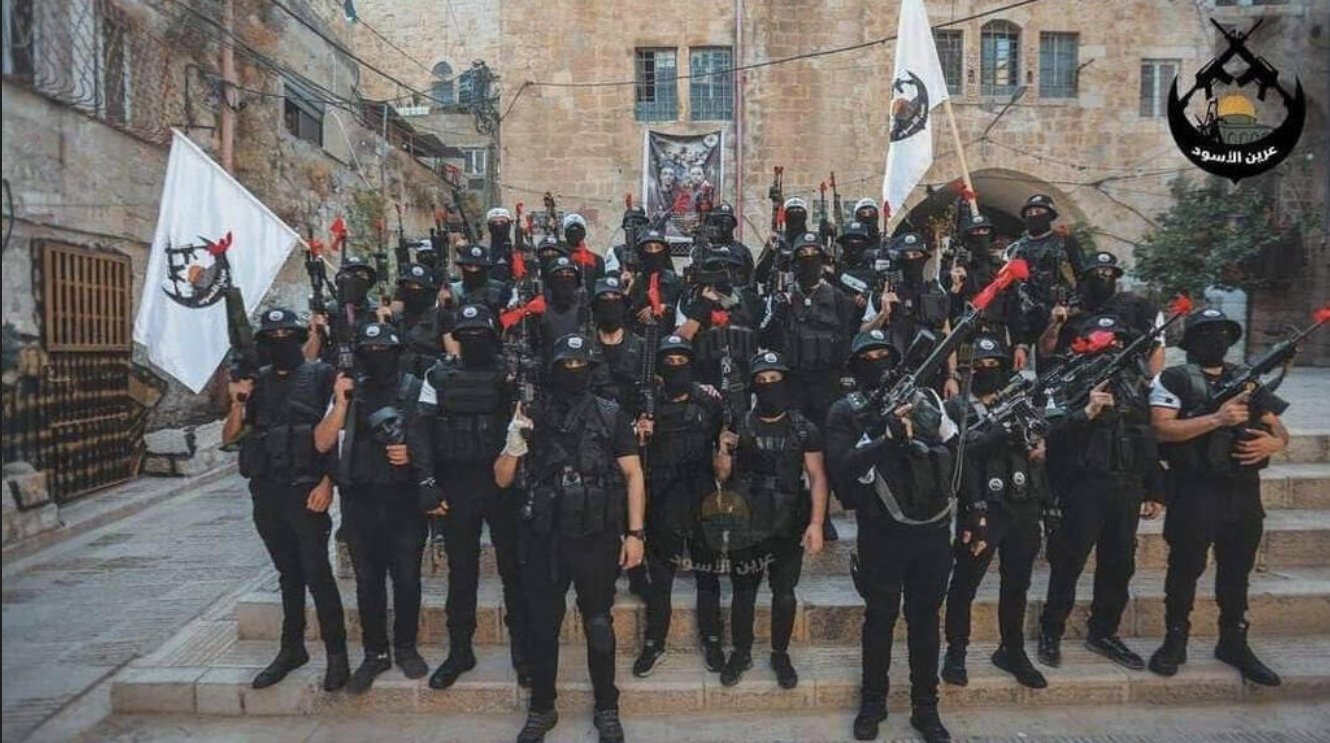
The new Palestinian terror group called the Lion’s Den is said to be behind the fresh wave of violence in Nablus, as well as recent terror attacks aimed against Israeli civilians and soldiers in the West Bank.
According to estimations, the group consists of some 50 Palestinians, all under the age of 30. It has no affiliation with any “established” terror organizations, and is described by residents of Nablus as “local thugs.”

“They hurt our economy, deal in protection racket and behave like criminals,” said one local resident. The group’s main goal revolves around targeting Israeli security forces, encourage other youths to imitate them and as a result become social media “terror influencers.”
The IDF warned the Palestinian Authority that it intends to raid Nablus to detain members of the group, but the PA requested to shift the course of action because every Israeli raid in the West Bank generates economic damage and scares away tourists.
The Lion’s Den has no headquarters or a chain of command. Nor do they have any organizational conduct from which any solid intelligence could be generated. They have managed to become quite the headache for PA’s Preventive Security Service (PSS), which appears to be helpless in the face of the group’s emergence.
But for the IDF, they are just another terror group. They must be stopped and Israel can’t wait for the PA to get itself together and do it since Israelis are the ones who end up paying the price.
The latest terror attack for which the group claimed responsibility occurred on Tuesday afternoon and claimed the life of IDF Staff Sergeant Ido Baruch.
According to the IDF, two assailants arrived in a vehicle to a spot close to the settlement of Shavei Shomron in the West Bank, and fired at troops who were conducting operational activity in the area. The forces didn’t return fire, and the incident is being investigated by the IDF to draw conclusions.
The same happened during a terror attack on Saturday, in which female soldier Noa Lazar was killed. And unlike that attack, which was aimed against Border Police officers, the shooting near Shavei Shomron involved elite IDF troops – yet, still was not prevented.

On Tuesday evening, I toured the area of the attack and spoke to several IDF soldiers. They said there is great difficulty in maintaining operational awareness when each vehicle passing by could potentially be carrying terrorists who could at any moment open fire at troops.
The conclusion is that Israel needs to create deterrence, and then uproot terror elements from the general population across Palestinian cities. Only this time, it seems to be a more complex issue.
According to the Palestinians, terror elements are now interconnected with the criminal ones – which unfortunately happens way too often in the Arab sector even inside Israel.
Appease or Confront? Western Policy Options and the Iranian Nuclear Bomb

The world’s leading powers are saying unequivocally that Iran should not obtain nuclear weapons and that they are committed to preventing that from happening. At the same time, they remain bound to the idea of reinvigorating the Iran nuclear deal (JCPOA) in spite of the fact that the sunset of this deal would leave Iran with the capability to produce a big arsenal of nuclear weapons by 2031 without the West being able to do anything about it. What we can learn from this contradiction is that what really worries the West is to avoid the need of confronting Iran at this stage. They hope that by 2031 some miracle will happen that would enable the West to be saved from the need to act. In the worst case they would live with the consequences of the deal, namely a nuclear Iran with hegemonic presence in the Middle East that threatens Europe and the United States and attempts together with Russia and China to change the world order at the expense of the West.
This is a strange policy. It ignores all the wrongdoing of Iran on human rights issues, on developing ballistic missiles that threaten Europe, on destabilising the Middle East, on aiming to murder its dissidents and its opponents in the West, on denying the Holocaust, and on threatening Israel and wishing to wipe it off the map of the world. All of this is tolerated for the sake of avoiding the need to confront Iran at this point. No wonder that Iran keeps moving forward with its nuclear program and insists on its demands and conditions for America reentering the JCPOA. At this point they insist that the US and the IAEA (International Atomic Energy Agency) close the investigation of the nuclear sites that Iran did not declare and that the US provides stronger guarantee that the possible withdrawal of future US administrations from the deal would not harm the Iranian economy.
It seems that to justify this policy the leadership of the West is busy convincing itself that the current situation is worse than reentering the JCPOA. But is it? Let us compare these two evils and try to assess which is the lesser.
Option A: Keep the Pressure on Iran
Under existing conditions, Iran is trying to accumulate enough highly enriched uranium to produce a small number of nuclear devices while it is under economic pressure and its regional proxies are suffering from financial difficulties and limits to their ability to force their will upon the states in which they operate. Iran’s route to having the capability to produce several nuclear devices, and turning these devices to nuclear weapons, is unclear. This is because the Iranians themselves cannot be sure that they actually control the required technology or that their defenses are adequate to foiling an American and/or an Israeli attempt to hit their facilities, preventing them from reaching their goal.
Iran’s entire effort is considered by the international community to be illegitimate and an attempt to break out to the bomb is considered to be an act justifying a preventative military action.
Moreover, the international community has the justification to take severe steps against Iran because of its breach of its commitments according to the Non-Proliferation Treaty (NPT) i.e. declining to declare much of its activities to produce nuclear weapons under the Amad project between 2001 and 2003. Iran kept that as a secret until it was revealed recently in a way that led to the discovery of anthropogenic uranium particles in three of the undeclared sites. The Iranian refusal to address the IAEA demand for explanation and to come clean with information about the origin, whereabouts and the amount of the uranium that was processed in these sites justifies sanctions against Iran – and there is an ongoing process in the IAEA board of governors that may lead to such sanctions. This alone makes any return to the JCPOA, as the Iranians demand, totally irresponsible as there is no clue about the amount of unreported uranium that the Iranians have.
Iran’s foreign minister Hossein Amir-Abdollahian has just clarified to Al-Monitor that Iran wants the West to repeat the embarrassing and shameful move that enabled the international community to enter the JCPOA in 2015. This happened when the IAEA director general, Yukia Amano, admitted that he did not have an answer to the Potential Military Dimensions (PMD) of the Iranian nuclear program but nevertheless gave his approval for the deal to come into effect. So far, the new director of IAEA, Rafael Grossi, refuses to make a mockery of the agency and himself in that way, and the West hasn’t put real pressure on him to accept the Iranian conditions. However, judging by the West leadership’s will to avoid confrontation with Iran, it won’t be surprising if such pressure is applied soon. The relatively quiet response of the Western leadership to the suppression of the Iranian Hijab protests is another indication of what can be expected.
The problem is, of course, that since there is no coherent strategy to stop Iran from making progress towards its nuclear goals, the Iranians have already managed to get very close to having the capability of producing a small number of nuclear weapons. They already have enough uranium enriched to 60 per cent for producing fissile material for more than one nuclear device within a couple of weeks. Moreover, they possess enough uranium enriched to 20 per cent and to 4.5 per cent to produce enough fissile material for 3-4 additional nuclear devices within 3-4 months. Iran operates advanced centrifuges, some of which are enriching uranium to a high level in the deep underground facility in Fordow, and their scientists have produced uranium metal from highly enriched uranium. The delivery systems for a bomb are available to them in the form of long-range ballistic missiles. The only question mark is how long it will take Iran to weaponise the fissile material and turn it into a nuclear bomb. The answer to this question could lie in what happened in the undeclared sites. Some think that developing this technology from scratch may take up to two years, but I am less optimistic because I think the Iranians have already made some progress on this track and that they are secretly working on it even now. In any event, it will still take Iran about a year during which they are going to be very vulnerable. This means that action within a coherent strategy to stop the Islamic Republic from having the capability to acquire nuclear weapons from the situation we currently find ourselves in has to be taken immediately and it should include a credible military option.
Those in favour of returning the JCPOA claim that the international community and Israel itself are not currently prepared to present and use a credible military option, and therefore the pressing need is to look for other ways to handle the situation. What I can say about it is that the United States presented a credible military option to Israel back in 2012-2013 in its attempt to convince Israel not to take unilateral military action. Israel has also invested enormous amounts of resources during the last 18 years to develop its own capability to take care of the Iranian nuclear program and there is no reason to believe that these capabilities have dissipated. Obviously, more resources and more time will improve these capabilities, but this is a tautological truth. Ultimately, as long as the Iranians believe that the West and Israel may use their military option against them if they keep moving towards having the capability to produce nuclear weapons, there is a good reason to believe they will not break out to the bomb at this stage. In 2012 when Prime Minister Netanyahu drew a red line at the UN General Assembly (250kg of 20 per cent enriched uranium) the Iranians were careful not to cross that line. Ditto when the Americans came out with clear military threats.
Option B: Return to the JCPOA
Now let’s look at the alternative approach, of returning to the JCPOA. Unlike the current situation, adhering to the agreement will mean that in the short term the Iranian capability to break out to nuclear weapons will be much more limited as they will be required to give up the significant amounts of highly enriched uranium that they declared they have accumulated and be left with only 300kg of uranium enriched to 3.6 per cent (if they don’t cheat). Moreover, their advanced centrifuges (IR-6, IR-8, IR-9, IR-4, and IR-2m) should be disassembled and the monitoring of their activities in the declared sites will be resumed.
But, crucially, since the Sunset schedules of the original deal are not due to be extended, some of these limitations will be short lived. As early as 2024 Iran will be able to resume testing advanced centrifuges and by 2026 it will be able to operate some of them, in addition to the 5060 IR-1 centrifuges it operates in Natanz. By 2031 it will be able to enrich uranium to any level including over 90 per cent and to any amount with unlimited number of advanced centrifuges, and carry it out in any place it chooses including the deep underground facility at Fordow. Iran will also be able to advance the plutonium track by activating the Arak reactor with heavy water. It will still be committed to the safeguards of the NPT and hopefully to the treaty’s additional protocol. But judging by past behaviour, the Iranians don’t consider that to be a real obstacle on the way to having a nuclear weapon.
This means that by 2031, Iran will be able to produce a large arsenal of nuclear weapons without the international community being able to do anything about it. It should be emphasised that according to the revamped deal, the parties to the JCPOA are not allowed to leave the deal after the tenth year (early 2026). In other words, the major leverage they have to threaten Iran and force it to stay committed to the deal – the Snapback option – will soon become obsolete.
Furthermore, the road to this dangerous situation will be paved by considerable amounts of money (at least USD 100bn) that will be provided to the Iranians for their readiness to adopt the deal. This fortune will be used not only for improving the economic situation and strengthening the stability of the regime. It will also undoubtedly go towards improving Iran’s military ability to foil attempts to hit its nuclear infrastructure, to strengthen its regional proxies, and to embolden its hegemonic status in the region. In the revised deal Iran gets some guarantees that even if a new administration in the US decides to leave the deal its economic benefits would not be (severely) hurt.
Iran’s success in forcing the United States back into the agreement under its conditions will be presented by the Islamic Republic as a big victory over the evil forces. It may even be interpreted this way by some regional players who might prefer to mend fences with the Iranian regime rather than to confront it, while also preparing themselves to deter Iran. This will mean tensions between the local players and the United States and possibly a nuclear arms race in which regional powers will start seeking their own military nuclear arsenal. This is, of course, a nightmare that might not be prevented with all the good intentions of the US and the Western powers.
The Biden administration is aware of all the deficiencies of the deal and initially tried to present coming back to it as an interim stage that would lead to a ‘longer and stronger deal’. This policy was always out of touch with reality and in recent months the administration has admitted this and given it up. Consequently, the new deal will not take care of any of the weaknesses of the original deal, from the lack of ‘anywhere anytime’ monitoring, including of Iranian scientific experts, to the absence of a ban on the production of long-range missiles that can carry nuclear warheads.
Israel
If the West, including the UK, refrains from taking these difficult decisions Israel will have to take the heavy burden on itself. Some Israelis claim that the JCPOA is a lesser evil and a few even contend that Israel too can live with a nuclear Iran. This attitude ignores the real goals of the Iranian regime. It is a messianic regime committed to annihilating Israel and it is going to turn the JCPOA and its possession of nuclear weapons into major tools towards achieving this goal. Iran’s proxies are going to become much more capable and daring in their readiness to challenge and threaten Israel. Iran’s own capability to harm Israel is going to grow significantly and become a severe strategic threat, maybe even an existential threat. Therefore, Israel cannot afford to let Iran progress towards obtaining the capabilities to produce nuclear weapons and will have to take action to prevent it.
Even though Israel is not a party to the deal, the JCPOA will put limitations on Israel’s ability to operate, because of its close relations with the United States and the West. The absence of a deal thus gives the country greater room to maneuver. Moreover, as time goes by Iran’s capability to deprive Israel (and the United States) of the ability to stop its march to the bomb is going to grow considerably. This is an additional reason why Israel opposes the return to the JCPOA.
Difficult Decisions for the US and UK
Between the two problematic options, confronting Iran’s attempt to reach the capability to produce a limited amount of nuclear devices without returning to the JCPOA is the lesser evil, provided the West and Israel are able to present a credible military option. If this is not the case, maybe there is a point in deferring the problem, even if it means a greater evil in a couple of years.
One explanation for the West’s preference to reenter the deal, even if it is weaker than the original JCPOA, may have to do with the political aspect. The Biden administration is committed to the legacy of the Obama–Biden administration, and does not want to admit that a better deal could have been reached (as the Trump administration insisted). Hence, it limits its goals to reentering the weaker version of the original deal. Another political consideration is avoiding the need to take critical decisions at this time and to defer the decision to the next administration, fearing that any decision will have a political cost. Other political reasons have to do with the importance attributed by the administration to keeping the oil price down at this time, a preference which makes increasing the Iranian oil exports an important goal.
All of this reminds me of a meeting I had in 2016 with a key official in the Obama White House who is still deeply involved with the Iranian nuclear negotiations. When I complained about the problematic JCPOA they argued that in the first six years the benefits of the agreement outweigh its disadvantages, and only from year 7 the opposite is true. This means, they said, that the President that would be in office in year 7 (in other words, now) will have to decide whether the US is going to stick to the deal or not and base this decision on Iranian behaviour. If Iran joins the family of nations, renounces terrorism, and becomes a positive player on the global and regional stages, I was told, then it makes sense to keep moving forward. But if these expectations do not come true the president should decide against moving forward with the deal.
Iran has not changed its ways, that is clear. So if the administration is true to its own assessments at the deal’s outset it should not reenter it but rather adopt the policy of preventing Iran from advancing towards obtaining the capabilities to produce nuclear weapons. This can be done by isolating Iran, applying economic pressure, making much greater efforts to preventing Iran from acquiring the material and know-how it needs to produce these weapons, and presenting a credible military option to convince it to give up the pursuit of the bomb.
The United Kingdom can play a significant role in preventing Iran from possessing the capability to produce nuclear weapons. If London under PM Truss adopts an unwavering policy that says Iran should be stopped now and not be allowed to enter the JCPOA, it will change the entire situation and force the other Western powers to revisit their policies. Truss has already committed herself to putting all options on the table if the JCPOA collapses.
At this point it seems that reviving the JCPOA is not only the wrong thing to do but almost impossible due to the Iranian hubris that translates into an insistence that the IAEA close its investigation of the undeclared sites. Britain knows that the Iranians have no intentions of changing course and should draw the unpleasant conclusion that it is necessary to stand firm. PM Truss has previously said ‘we are dealing in a world where we have to make difficult decisions’. This line of thinking definitely justifies doing the right thing which is confronting Iran’s dangerous march towards having nuclear weapons at this point while Iran is vulnerable and not allowing it to become immune and gain the capability to acquire a big nuclear arsenal by returning to the JCPOA.
Half of Gazan children suffering mental health problems, says UNRWA

Half the children living in Gaza are suffering from mental health issues, while a third of the Strip’s two million inhabitants are in need of psychological support but only have one hospital that provides it, according to a report by the United Nations’ agency for Palestinian refugees.
To mark World Mental Health Day on Monday, UNRWA highlighted the impact of the multiple escalations of tension between Israel and Palestinian militants operating in the enclave, a situation in which the Gazan civilian population is the most vulnerable and is suffering the most severe consequences.
“In the Gaza Strip, the 15-year Israeli blockade by land, sea and air, and the multiple violent escalations have caused persistent trauma to its inhabitants and have triggered a mental health crisis,” the UNRWA statement said, alluding to the incessant conflicts taking place since the Islamist Hamas movement began de facto control of the enclave in 2007.
The report places particular emphasis on the lack of medical infrastructure in the Gaza Strip, which has only one hospital specializing in mental health, highlighting that “the long-term psychological effects of constant exposure to violence lead to depression, insomnia, pain, fear and epilepsy.”
The violence and shortage of infrastructure and adequate medical care in Gaza are compounded by the difficult living conditions, with more than two million people living crammed into a territory that is just 40 kilometers (24 miles) long and 10 kilometers wide.
In Gaza, unemployment figures exceed 50%, more than 65% live below the poverty line, energy supply is reduced to only a few hours a day with multiple outages, and access to safe drinking water is limited.
In addition, the Israeli blockade, coupled with tight restrictions imposed by Egypt on the Strip’s southern border, limits the movement of people and goods to and from Gaza, confining its inhabitants within the walls that contain the coastal enclave and isolating them from the world.
Beyond the psychological damage caused by the escalating violence with Israel, the material damage is also severe, and the Strip is still trying to recover from the latest clashes this summer.
The latest spike in tension took place at the beginning of August this year, when 50 Gazans died as a result of Israeli bombardments, which also destroyed more than 1,500 homes and multiple civilian structures.
Observation: Efficacy of Lebanon Deal Question For Lawyers Not Defense
Content preview: Observation: Efficacy of Lebanon Deal Question For Lawyers
Not Defense Experts Dr. Aaron Lerner 11 October 2022 The efficacy of the
Lebanon deal, in particular the status of the swath of area off our northern
coast which we unilaterally hold for vital security reasons, is a question
of international law and thu […]
Content analysis details: (0.0 points, 5.0 required)
pts rule name description
—- ———————- ————————————————–
0.0 RCVD_IN_MSPIKE_H3 RBL: Good reputation (+3)
[194.90.9.20 listed in wl.mailspike.net]
-0.0 SPF_PASS SPF: sender matches SPF record
0.0 SPF_HELO_NONE SPF: HELO does not publish an SPF Record
0.0 RCVD_IN_MSPIKE_WL Mailspike good senders
SpamTally: Final spam score: -40
X-Antivirus-Scanner: Clean mail though you should still use an Antivirus
Observation: Efficacy of Lebanon Deal Question For Lawyers Not Defense
Experts
Dr. Aaron Lerner 11 October 2022
The efficacy of the Lebanon deal, in particular the status of the swath of
area off our northern coast which we unilaterally hold for vital security
reasons, is a question of international law and thus not in the bailiwick of
defense experts.
A defense expert can proclaim that this critical area is secured by the deal
for all kinds of reasons which are driven by their assessment of the
deterrent effect that implementation of the deal may have on Hizbullah
rather than any definitive rights which the deal gives to the Jewish State.
And that’s an extremely reckless assumption.
I daresay that most of the very same talking heads now explaining that the
existence of a Lebanese gas rig serves as our guaranty of good behavior on
the part of the Lebanese will explain with the same or more vigor, should
things go terribly wrong, that WE CANNOT DESTROY THE GAS RIG OF A FRENCH
COMPANY.
I write with an extremely heavy heart that many of the defense experts now
talking about deterrence have for years embraced the self serving illusion
that Hizbullah has not fired its huge arsenal of rockets at us because it is
deterred rather than patient.
A reminder: while we frequently bomb Syrian locations associated with the
Iranian program to supply Hizbullah with guided rockets, the Israel Air
Force takes no action once these same rockets reach Lebanon (and/or if they
are assembled in Lebanon). So who is the deterred party?
And when you take the French gas rig of the board we find ourselves
threatening to bomb Lebanon back to the stone age when the Lebanese already
managed to put themselves in the stone age.
We have a long history of screwing up on the wording of agreements and
written understandings because we thought that the dynamics of the situation
were more important than the texts.
And time and again we have found ourselves plagued by errors and omissions.
An example: United Nations Security Council Resolution 1701 was the crowning
achievement of then FM Tzipi Livni. It turned out that its wording
effectively neutered the UN force created to implement it in Lebanon.
It is reported that Naftali Bennett will decide how to vote on the deal
after consulting with defense experts and reads the text himself. I
sincerely hope that he sits down with an experienced international law
expert before making his decision.
________________________________________
IMRA – Independent Media Review and Analysis
Since 1992 providing news and analysis on the Middle East with a focus on
Arab-Israeli relations
Website: www.imra.org.il
Israel and the US face elections on November 1 and November 8 respectively. Both electorates in the dark concerning crucial Middle East issues at this time – And How to Correct that.
1.The Palestinian Security Forces (PSF), trained by IDF under the direction of the US to fight Arab terrorists, now carry out daily attacks by PSF elite unit known as Al Aqsa Brigades. Yet US & Israel continue full security training of the PSF . (1)
- With the knowledge of the governments of Israel and US, the Palestinian Authority has enacted unprecedented legislation to provide a salary for life for anyone who murders a Jew. (2)
While the media has widely reported that the PA pays killers, the press downplays a relatively new PA law which legislates automatic payments for anyone who murders a Jew, anywhere and at any time.
While the government of Israel reduces allocations to the PA according to the amount that the PA pays convicted killers, that simply allows Saudi Arabia, Qatar & others to fill in the cash flow gap for convicted felons. As a journalist, asked spokespeople of US Ambassador Nides and Israel Foreign Minister Lapid if the governments of Israel and they would demand that the PA repeals the law which provides a salary for life for anyone who murders a Jew, which functions as an incentive to kill. Received “no comment” – in writing- from both governments.
- With full knowledge of the US and Israel governments, the Palestinian Authority Education Ministry has created a new curriculum which indoctrinates children to make war on the Jews.(3) Asked spokespeople of the US and Israel if they would demand that that the PA drop their curriculum. Neither government would agree to do so. The governments of Israel and the US will not even ask that the PA remove the PA textbook from 2018 which displays Dalal Al Mugrabi, who murdered 35 Jews, including 12 children, as a role model for the next generation (4)
- UNRWA allocates a $1.6 billion budget to service 6.7 million descendants of Arab refugees in 59 “temporary” refugee camps, while inculcating their “right of return” to villages which existed before 1948…by force of arms. Asked spokespeople of the US and Israel governments if they favored a change in UNRWA policy (5). Response of the US and Israel: negative.
- Meanwhile, PA texts used by UNRWA now distribute 120 new maps which replace any Jewish presence with Arabic names –on both sides of the 1967 line- a new form of Judenrein.(6)
The governments of Israel and the US could ask UNRWA to use standard maps in schools which run under the auspices of the UN to depict geographic details of each UN member state, including Israel.
Asked the US and Israel government spokespeople if they will make any such that demand.
The answer was negative – from Israel and from the US.
How to get these issues into the public eye: Action items.
- Activate families whose loved ones have been murdered by Arab terrorists to conduct vigils in front of foreign and Israel TV news bureaus to demand news coverage of the continuing enforcement of the PA pay for slay law, which provides an unreported incentive for murder.
- Give publicity to PA law which provides salaries for life for anyone who murders a Jew.
- Dispatch TV crews to film a PA/UNRWA school in action at this time.
- Produce a short movie: How the US and Israel train PSF- now launching attacks on Jews
5 During last week of October, run daily ad in NYT & Yediot: *What a PA state means: *Proximity of proposed PA State to Jewish population centers, *Armed terrorists at Borders, *Legislated incentives to kill *PA demarcation of Palestine, all of Palestine, on their new maps.
FOOTNOTES
- https://israelbehindthenews.com/2011/05/05/dangers-us-aid-palestinian-security-forces-2/
- https://israelbehindthenews.com/2017/01/11/incentivizing-terrorism-palestinian-authority-allocations-terrorists-families/
- https://www.terrorism-info.org.il/en/?s=GROISS
- https://israelbehindthenews.com/2021/11/30/dalal-al-mughrabi-a-murderous-terrorist-as-a-role-model-in-palestinian-authority-schoolbooks-used-by-unrwa-2/
- https://israelbehindthenews.com/2019/04/02/six-policy-challenges-to-guide-unrwa-policy-ref
- https://israelbehindthenews.com/2022/09/24/revealing-maps-the-palestinian-vision-as-taught-in-unrwa-schools/
The Problem with Lapid’s Weak Conditions for Establishing a Palestinian State
Institute for Contemporary Affairs
Founded jointly with the Wechsler Family Foundation
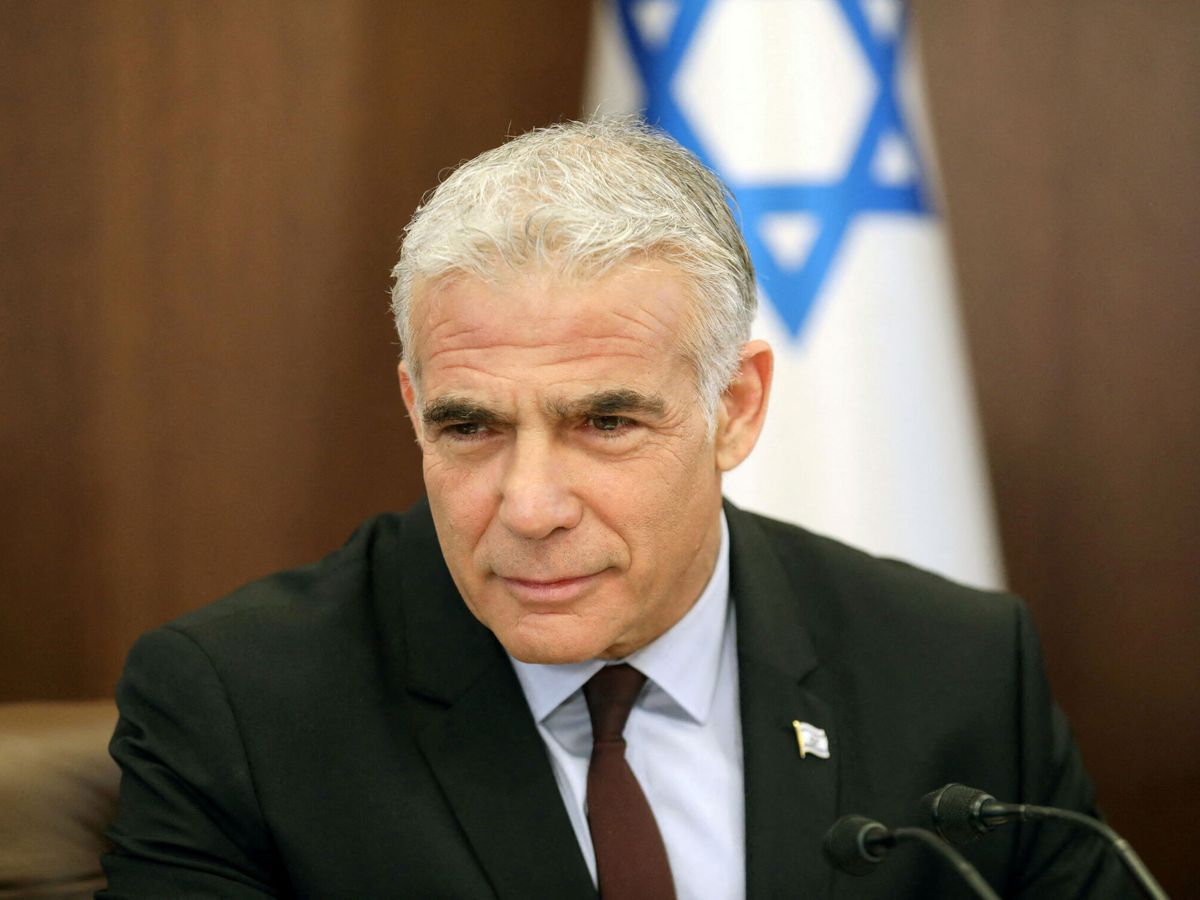
- At the UN General Assembly in September, Israeli Prime Minister Yair Lapid expressed the dream of reaching an arrangement with the Palestinians that would rid Israel of the reality of the “occupation,” while at the same time achieving security for Israel. His remarks show that he understands how far we are from a solution. However, Lapid’s formulations regarding the conditions for establishing a two-state solution for two peoples indicate too little familiarity with past discussions of the issue.
- Israeli prime ministers and U.S. presidents have made it clear to the Palestinians that the realization of the idea of a Palestinian state depends on their willingness to recognize Israel as the nation-state of the Jewish people. Only such recognition can lead, after time, to the abandonment of terrorism and acceptance of the reality of two states for two peoples, one of which is the Jewish people.
- President Trump raised a series of additional conditions including the cessation of incitement and hate indoctrination, the cessation of the payment of salaries to terrorists, giving up the attempt to sue Israel in the International Criminal Court, and Palestinian willingness to accept Israeli security supremacy that would allow Israel to deal with those involved in terrorism against it in the territories of the Palestinian state.
- As long as the Palestinians are committed to the narrative adhered to by Palestinian Authority Chairman Mahmoud Abbas in his UN remarks, the chances of a renewal of terrorism will be high. This narrative argues that the Palestinians have a vested right to the entire territory of historic Palestine, that there is no Jewish people and the Jews have no sovereign history in the Land of Israel/Palestine, and that Israel was established by colonialism and imperialism that wanted to rid themselves of the presence of the intolerable Jews in their countries and exploit them as a bridgehead in the struggle against Islam. Therefore, the Palestinians have the right and duty to fight for the realization of their goals, chief among them the victory over Zionism.
- The idea that Israel needs to “strengthen the PA” reflects an exaggerated fear of its collapse. The PA is not in danger of collapse. It continues to function as a mechanism that manages the lives of Palestinians and employs some 160,000 officials. It also continues to be perceived, despite the criticism of its senior figures, as the Palestinians’ main national achievement. A focus on strengthening the PA ignores the fact that it does not fight terrorism but encourages it, perpetuates the Palestinian narrative through incitement, and works to promote this in the international arena as well.
- Israel must continue to intensify its efforts to thwart terrorism as part of Operation “Break the Wave” and through increased military deployment in Jerusalem and at recognized friction points. The idea that refraining from action will stop the cycle of terrorism ignores the fact that the motivation for carrying out attacks is not due to the activities of the IDF and the Israel Security Agency on the ground, but is rooted in much deeper motives derived from the Palestinian narrative described above.
The speeches delivered at the UN General Assembly by Israeli Prime Minister Yair Lapid, Palestinian Authority Chairman Mahmoud Abbas, and American President Joe Biden, together with Abbas’ recent remarks on the “50 holocausts” that Israel carried out against the Palestinians and the tense situation in Jerusalem and Judea and Samaria, reflect the complex reality currently framing the Palestinian issue.
Lapid expressed the dream of a part of the Israeli public to reach an arrangement that would rid Israel of the reality of the “occupation,” while at the same time achieving security for Israel. His remarks on the lessons we have learned from the disengagement from Gaza reflect the distress faced by this part of the Israeli public, and they show that the prime minister understands how far we are from a solution. However, Lapid’s formulations regarding the conditions for establishing a two-state solution for two peoples are not clear enough and indicate a kind of naivety and too little familiarity with past discussions of the issue.
Past Discussions of Conditions for a Palestinian State
U.S. Secretary of State Colin Powell, followed by Israeli Prime Ministers Sharon and Netanyahu, and apparently Foreign Minister Tzipi Livni, as well as President Obama, President Biden implicitly in his recent visit to Bethlehem, and of course President Trump in his peace plan, made it clear to the Palestinians that the realization of the idea of a Palestinian state depends on their willingness to recognize Israel as a Jewish state or as the nation-state of the Jewish people. Only such recognition can lead, after time, to the abandonment of terrorism and acceptance of the reality of two states for two peoples, one of which is the Jewish people.
Prime Minister Rabin simply ruled out the possibility of a Palestinian state under any conditions. Lapid, on the other hand, confined himself to a formula that ignores the roots of terrorism and conditions the establishment of the Palestinian state only on the cessation of terrorism. It is an approach that effectively guarantees dangerous concessions to expedite the realization of the false maxim of conflict resolution.
Trump raised a series of additional conditions – no less essential – including the cessation of incitement and hate indoctrination, the cessation of the payment of salaries to terrorists, giving up the attempt to sue Israel in the International Criminal Court, and Palestinian willingness to accept Israeli security supremacy that would allow Israel to deal with those involved in terrorism against it in the territories of the Palestinian state. Lapid, for some reason, omitted all these stipulations.
In practice, the establishment of a Palestinian state under the conditions presented by Lapid will make it very difficult for Israel to act against terrorism when it resumes from the territory of the Palestinian state because it will be impossible for Israel to operate in the territory of a foreign country without restriction.
The Palestinians Remain Committed to Their Anti-Israel Narrative
Moreover, the chances of a renewal of terrorism will be high as long as the Palestinians are committed to the narrative adhered to by Abbas, together with Hamas, Palestinian Islamic Jihad, and the other factions. This narrative, which was reflected in Abbas’ speech at the UN and in his problematic remarks in Germany, argues that the Palestinians have a vested right to the entire territory of historic Palestine, that there is no Jewish people and the Jews have no sovereign history in the Land of Israel/Palestine, and that Israel was established by colonialism and imperialism that wanted to rid themselves of the presence of the intolerable Jews in their countries and exploit them as a bridgehead in the struggle against Islam.
Therefore, the Palestinians have the right and duty to fight for the realization of their goals, chief among them the victory over Zionism, in all ways, including the use of violence and terrorism (although Mahmoud Abbas prefers, for cost-benefit considerations, to focus on violence that does not involve the use of firearms). In addition, the Palestinians must not relinquish their status as the exclusive collective victims of the conflict, continue to integrate the national and Islamic dimensions in their political campaigns, and maintain their refusal to accept Israel as a Jewish state.
In order to justify such dangerous moves within the Israeli discourse, false threats are raised that if we do not promote moves that will lead to the existence of a Palestinian state, we will find ourselves unwillingly in the reality of one bi-national state, and that will be the end of the Zionist vision.
Yet this threat is completely baseless. The political separation between Israel and the Palestinians has already been carried out within the framework of the Oslo Accords and is reflected in the establishment of the Palestinian Authority, which is the body through which the Palestinians realize their political rights and control their own destiny. This includes the Hamas-controlled system in Gaza and the Fatah-controlled system in Judea and Samaria. Raising concerns over a binational state is simply a tool to pressure Israel and justify the establishment of a Palestinian state or unilateral separations in the absence of the conditions for the establishment of this state.
The Intensification of Palestinian Terrorism
What should really bother Israel is the intensification of Palestinian terrorism as a result of the ongoing incitement and the erosion of the Palestinian Authority’s ability to fulfill its role as the manager of the territories under its control. This is due to the rampant corruption, and because of frustration by Mahmoud Abbas and many others in the Palestinian leadership over their inability to advance their political goals at Israel’s expense. This is due to both economic difficulties and because of the sense that Abbas’ hold on his position as chairman of the PA, the PLO, and Fatah is being undermined by his advanced age, and therefore everyone must prepare for the “day after.”
Does Israel Need to Strengthen the PA?
The Israeli response to this reality appears to be limited to the idea of “strengthening the PA,” reflecting an exaggerated fear of its collapse. In practice, despite its difficulties, the PA is not in danger of collapse. It continues to function as a mechanism that manages the lives of Palestinians and employs some 160,000 officials. it also continues to be perceived, despite the criticism of its senior figures, as the Palestinians’ main national achievement.
A focus on strengthening the PA ignores the fact that it does not fight terrorism but encourages it, perpetuates the Palestinian narrative through incitement, and works to promote this in the international arena as well. The PA also reconciles the involvement of Fatah elements and the PA security apparatuses in terrorism in the West Bank and even encourages this.
Although the PA sometimes acts against Hamas activists in its territory, as it has done recently in Nablus, this is mainly because it sees them as a threat to its survival in power. Israeli efforts are also carried out while ignoring the fact that the PA’s weaknesses are so profound that there is no assurance that Israel’s actions will actually lead to a change in the trend, and to some extent they are even harmful in portraying the PA as collaborating with Israel. As a result, the chances that the effort to strengthen the PA will lead to a change for the better in its policy are slim.
What Should Israel Do?
So what should Israel do? First, it must continue to intensify its efforts to thwart terrorism as part of Operation “Break the Wave” and through increased military deployment in Jerusalem and at recognized friction points. This is in parallel with the continued buildup of readiness for another campaign against the terrorist organizations in Gaza, which will lead to a significant blow to Hamas’ ability to threaten Israel.
The idea that refraining from action will stop the cycle of terrorism ignores the fact that the motivation for carrying out attacks is not due to the activities of the IDF and the Israel Security Agency (ISA) on the ground, but is rooted in much deeper motives derived from the Palestinian narrative described above.
Second, Israel must try to continue to develop relations with Arab countries according to the model of the Abraham Accords because this is the best way to illustrate to the Palestinians that their concept of the struggle against Israel is archaic and futile. In the first stage, recognition of this reality may increase Palestinian frustration and encourage terrorist attacks, but over time, recognizing the futility of the attacks and the denial of recognition of Israel as a Jewish state is essential to Palestinian introspection that may promote other views.
Third, Israel must strengthen those in the Palestinian system who are willing to prioritize improving the quality of life over commitment to the struggle and work directly with them and not through the Palestinian Authority or Hamas. Raising the number of work permits in Israel for Palestinians and allowing Palestinians to fly from Ramon Airport are positive examples of this type of action.
Fourth, Israel must continue to demand that the Palestinians stop incitement and salary payments to terrorists imprisoned in Israel and make it clear that a solution to the conflict is contingent on the acceptance of Israel as the nation-state of the Jewish people.
Above all, we must understand that the struggle is still long and we must be prepared for its continuation militarily, politically, and mentally, and not get caught up in the fallacies and false visions that threaten to undermine the consciousness required for this struggle.
* This article originally appeared in Hebrew on the N12 website (Israel TV Channel 12) on September 30, 2022.
Former lone soldier David Morel seriously injured in Shuafat terror attack
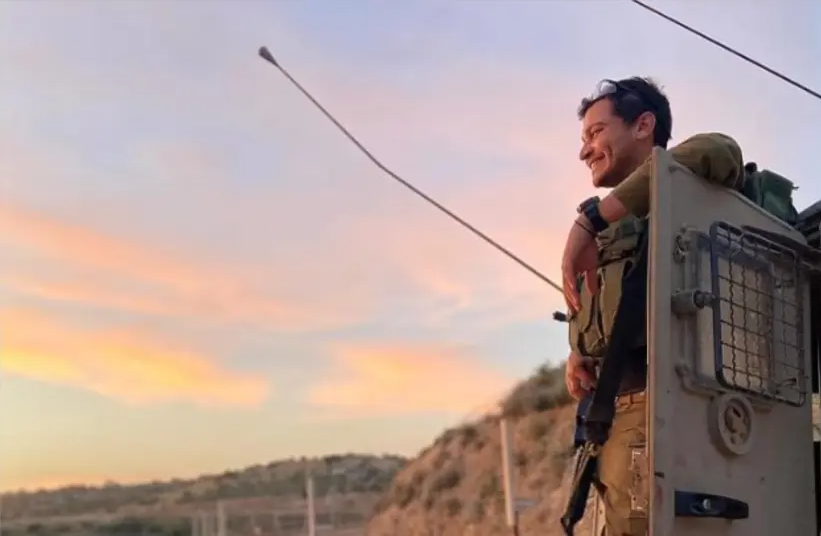
Civilian security guard David Morel, who was seriously injured in the Shuafat terror attack on Saturday evening, remains in a serious and unstable condition, Hadassah University Medical Center said in an update on Tuesday morning.
30-year-old Morel originally immigrated to Israel from Brazil in 2017, drafting as a lone soldier into the IDF, where he completed his service in the Search and Rescue Brigade.
Following his service, Morel found work as a civilian security guard, first at the Jerusalem Municipality and then later at checkpoints, including the one at the entrance to the Shuafat refugee camp.
On Saturday evening, Morel was seriously injured in the Shuafat checkpoint shooting that claimed the life of 18-year-old Border Police officer Noa Lazar, and he remains sedated and on ventilation in the intensive care unit of Hadassah University Medical Center on Jerusalem’s Mount Scopus.
While Morel lies in the ICU, the search for the terrorist continues, with Israeli security forces releasing a photo of the 22-year-old shooter Udi Kamel Tamimi in their appeal for information about his whereabouts. As the search for him continues, Palestinian media has reported that IDF forces are preparing for the demolition of his family’s home in the Shuafat refugee camp.
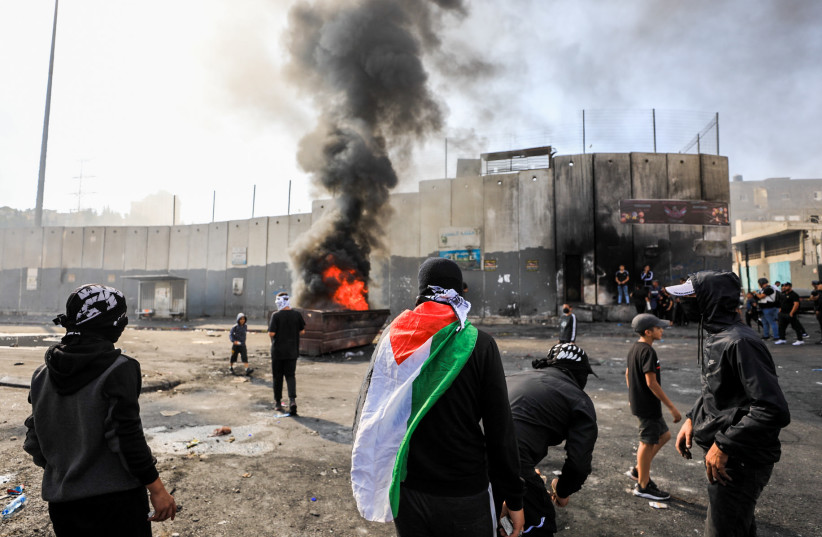
 Palestinian youths clash with Israeli security forces in the Shuafat Refugee Camp, east Jerusalem, October 10, 2022. (credit: JAMAL AWAD/FLASH90)
Tamimi arrived at the checkpoint in a vehicle belonging to a stranger who was under the impression that he was taking a hitchhiker to Modi’in. When the car stopped at the checkpoint, Tamimi fired seven rounds at the checkpoint until his gun jammed. He then fled on foot. The driver then turned himself in and police concluded that he did not intentionally involve himself in the attack.
Death of Sgt. Noa Lazar
18-year-old Lazar was killed while on duty at the Shuafat checkpoint, although her death was not made public by the IDF until several hours after the attack.
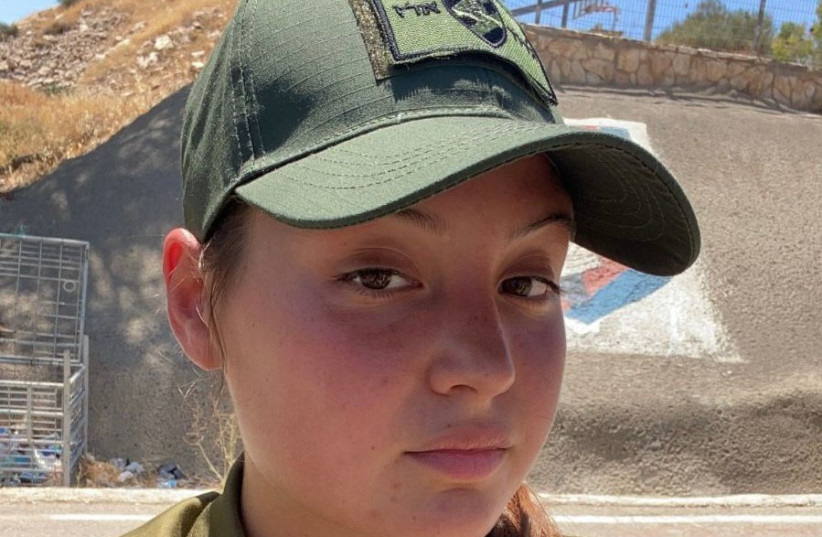 Sgt. Noa Lazar. (credit: IDF SPOKESPERSON UNIT)
Lazar was originally from the northern town of Bat Hefer and she served in the IDF’s Military Police Erez battalion. She was promoted posthumously from the rank of corporal to sergeant.
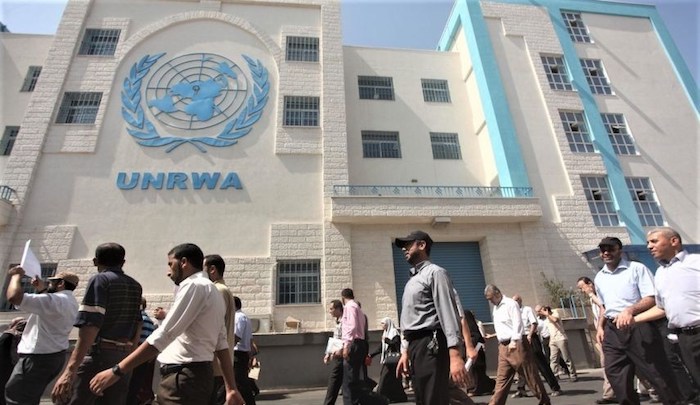
Response of US embassy to attack at the UNRWA facility in Shuafat
Kristin Stewart
Press Officer/Spokesperson
U.S. Embassy Jerusalem | Tel Aviv Branch Office
Dear Kristin,
Greetings., With warmest regards to Ambassador Nides.
The US has returned to the position as the leading funder of UNRWA;;
In the wake of the armed and violent riots at the UNRWA facility in Shuafat:
Will the US government ask for an inspection .of UNRWA facilities in Shuafat for arms and munitions?
Will the US ask for UNRWA in Shuafat to remove active members of Fatah, Hamas and Islamic Jihad be removed from the UNRWA payroll?
For your perusal, my latest UNRWA piece:
Thank you for your prompt response
Deadline; Ocr. 12, 2022 9am Israel time,
Yours,
David


