Aired April 20, 2022 – 13:00:00 ET
THIS IS A RUSH TRANSCRIPT. THIS COPY MAY NOT BE IN ITS FINAL FORM AND MAY BE UPDATED.
[13:00:20]
CHRISTIANE AMANPOUR, CNN INTERNATIONAL HOST: Hello, everyone, and welcome to AMANPOUR.
Here’s what’s coming up.
(BEGIN VIDEOTAPE)
AMANPOUR (voice-over): As clashes flare in Jerusalem, my exclusive interview with the Israeli prime minister, Naftali Bennett, whose
government hangs by a thread.
Then:
QUESTION: Mr. President, will you be sending more artillery to Ukraine?
JOE BIDEN, PRESIDENT OF THE UNITED STATES: Yes.
AMANPOUR: Ukraine’s allies pledge to send more weapons, but will it be enough and will they get there in time? I ask Senator Chris Murphy, leaving
Democrat on the Senate Foreign Relations Committee.
Plus: While the West campaigns to isolate Russia, we look at why many countries in the global south and beyond a staying on the sidelines.
And:
JUSTIN FENTON, AUTHOR, “WE OWN THIS CITY”: When complaints came in, those complaints were being discarded. They weren’t believed.
AMANPOUR: “We Own This City: A True Story of Crime, Cops, and Corruption.”
Michel Martin talks to author Justin Fenton.
(END VIDEOTAPE)
AMANPOUR: Welcome to the program, everyone. I’m Christiane Amanpour in London.
Clashes with Palestinians in Jerusalem have deepened the political crisis in Israel. Prime Minister Naftali Bennett’s fragile ruling coalition lost
its one-seat majority earlier this month when a member of his own party defected. Now it faces a new mutiny. The Arab Raam Party suspended its
membership in the coalition to protest the government’s handling of the clashes in Jerusalem.
And rockets have once again been fired between Gaza and Israel less than a year since the last crisis that left almost 300 people dead.
The Israeli prime minister is trying to hold his government together, all while attempting to negotiate and enter the war in Ukraine.
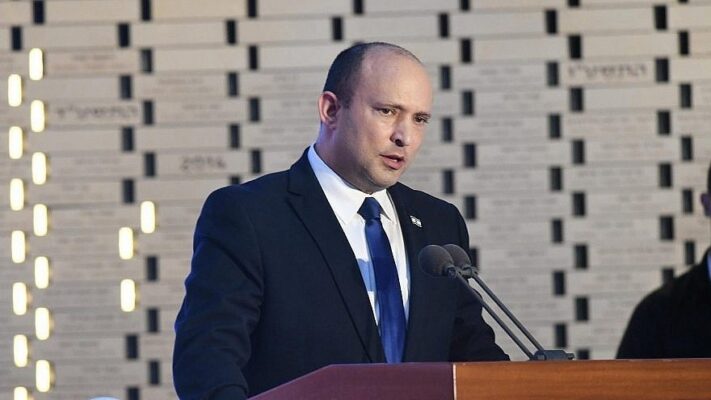
And Naftali Bennett joins me now for an exclusive interview from Tel Aviv.
Welcome back to our program, Prime Minister. Welcome to this first interview with us and the international TV, I think, as prime minister.
Not a great moment for you. Your government is hanging by a thread. Do you think you can remain prime minister?
NAFTALI BENNETT, ISRAELI PRIME MINISTER: Well, I think it’s vital for Israel to keep the stability and the success of this government.
Israel’s experiencing the highest growth in the advanced economies, better activity pretty much in every vector. But I want to tell you that our
government is a unique experiment. It’s the most diverse government in the history of Israel, religious and secular together, right and left, Arabs
and Jews.
And it transcends Israel itself. It’s an experiment in fighting polarization and having decent people that have different views working
together. And I’m convinced that the — that the members of this government and the Israeli public, for that matter, want it to succeed, which is why I
think it will succeed.
AMANPOUR: Well, then what are you going to do to ensure that it succeeds?
Because, as I said, one member of your own party defected. That was earlier. And now the Raam Party, the Islamist party, in fact, has suspended
its cooperation, not ended, suspended. What are you going to do to, I don’t know, change the situation that’s caused them?
And it is the reaction of the Israeli government to the clashes, Temple Mount, and elsewhere.
BENNETT: Well, first and foremost, I can tell you that all of the — my security decisions regarding actions on Temple Mount or with Gaza are not
political.
I take the decisions on the merit, what’s right for the security, what’s right to do. I’m not going to change that. I’m not going to change my
defense-related decisions because of political considerations.
I think and I expect all the members of the coalition to step up to the moment. We knew it was going to be hard. We knew that, when you put secular
and religious together, right and left, and Jews and Arabs together, there are going to be bumps in the road. But that’s the challenge.
And I think that there’s a unique opportunity for the first time ever in Israel, where there’s an Arab leader, Mansour Abbas, who is divorcing the
nationalistic elements from simply taking care of the Israeli Arabs. And I hope he steps up to the plate and his people.
AMANPOUR: You know, he might say the same about you and the government, hoping that you will step up to the plate as well.
There are something like 14 people on each side now, from the Israeli side and from the Palestinian side, who have been killed in these latest
clashes. And you say your defense and security policies are devoid of politics.
[13:05:12]
However, this is a picture that the world has gotten used to now. It’s constant cycle of killing, bloodshed, all sides really, really in
desperate, dire straits, collective punishment, and just numbers, huge numbers of dead regularly in Israel in 2022. So that’s the fact.
And there’s no — there doesn’t seem to be any attempt to negotiate an end to the actual conflict. I just wonder whether you’re spending any energy
and political capital, with this diverse coalition, to actually try to end this conflict?
BENNETT: Well, first of all, the way the facts were presented is not accurate.
Israel is peaceful. And about a month ago, unfortunately, a new wave of terror was thrown upon the Israeli public. We lost 14 people in four
different terror attacks in Be’er Sheva, Hadera, Bnei Brak, in Tel Aviv’s center, where Arab Muslim terrorists, some of them affiliated with ISIS,
just came with rifles and started shooting people on the street.
This is unacceptable. So I object to the notion of both sides. No. When they don’t attack us, we have no issues with them. But when they do attack
us, I have to fight back and hit them at their terror bases. And that’s what any leader would do. And that’s what I’m doing.
Now, regarding the broader picture, look I’m not going to take experiments on the security of the Israelis. Last time in Gaza, we did it about 15 or
16 years ago. We handed Gaza over to the Palestinians. We pulled back to the ’67 lines. We pulled out and expelled the Jews living in Gaza.
And what we got in return is hell, tens of thousands of rockets shot at us. I’m not in the business of playing experiments on the Israeli people. What
I will do and I am doing is people-to-people peace, bottom up, getting more jobs for Palestinians, better paid jobs, improving the economy. That’s what
I believe in.
And I have to say that the Palestinians are experiencing unprecedented prosperity.
AMANPOUR: The jobs issue that you have just said is jeopardized, because there has been a blockade against some towns leading into Israel. So,
Palestinians say that that doesn’t help them with the jobs.
But what I want to ask you is, when you say people to people, let’s just take what’s happening on the Temple Mount, Haram al-Sharif. When the world
sees and when Palestinians see and when your region sees Israeli soldiers inside that mosque, it creates a lot of tension, a lot of unease.
Why do you allow Israeli soldiers to go into that mosque?
BENNETT: Yes, well, Christiane, there you go again starting the story in the middle.
But the actual fact is that, last Friday, at about 5:00 in the morning, roughly 300 Palestinian rioters entered Temple Mount Mosque with
explosives, with stones. They began desecrating their own mosque, burning, throwing stones, and preventing about 80,000 decent Muslims from going to
pray.
My responsibility as prime minister of Israel is to provide freedom of prayer to everyone in Jerusalem, including Muslims, which is why I had to
send in policemen to remove the rioters. And it worked. Indeed, 80,000 Muslims went on later to pray peacefully.
So, when faced with violence, you have to act tough.
AMANPOUR: Mr. Prime Minister, you say there I go again. Clearly, there’s violence. We all watch it. We can see — we can see what happens.
But let me now quote your own — your own Israeli security people. Again, the context, the West Bank has been occupied since 1967. Settlers are
allowed to be there. It is a minority. I know that. But they’re there. And they are violent, this minority. And it is generally deemed illegal by the
rest of the world, the settlers in occupied territory.
But that’s a background to what I’m going to quote you.
Major General Yehuda Fuchs, who is the commander of your Israeli troops in the West Bank — is he not, Major General Yehuda Fuchs? He said in an
interview with “The New York Times” that he was concerned about what he called settler terrorism and was exerting a lot of effort to avoid it. He
said his job is to make sure both Israelis and Palestinians are safe.
[13:10:00]
So, if he says that, what is your response to that?
BENNETT: No, what you have been projecting is blatantly false.
AMANPOUR: Why do you say that?
BENNETT: The overwhelming majority — I will tell you why I say it, because it’s a lie, simply a lie.
AMANPOUR: No, sir, you can’t…
BENNETT: The overwhelming majority of the half-million Israelis…
AMANPOUR: You cannot say that to me. You cannot tell me I’m lying.
BENNETT: Let me finish.
Christiane, I can.
AMANPOUR: Mr. Prime Minister, I said a minority of extremists.
BENNETT: Well, you are misrepresenting the facts.
AMANPOUR: That’s what I said. That’s what I said.
BENNETT: Well, it’s a tiny minority.
AMANPOUR: That’s what I said.
BENNETT: A tiny minority.
And I object the symmetry that you’re trying to create here, because, out of a half-a-million of good Israelis, decent…
AMANPOUR: There’s no symmetry. I’m talking about your own generals.
BENNETT: Could I finish the sentence, Christiane?
AMANPOUR: Yes.
BENNETT: Out of half-a-million Israelis that are decent and law-abiding Israelis living in Judea and Samaria, there’s several hundred, perhaps even
less, who apply violence from time to time.
But who’s getting murdered? We’re seeing Palestinians murder Israelis. We’re not seeing Israelis murdering Palestinians. And that’s why there’s no
symmetry here.
And I also object. These are not occupied territories. They’re territories in dispute. And we have claimed to — our own place, as well as them. I get
it. No one’s going anywhere. We have to figure out how to live together. That’s my job, to provide security for Israelis, dignity for Palestinians.
I’m working on that very hard. And we’re succeeding. The problem is that the Palestinian leadership is totally corrupt, incompetent. So we have to
do the job because there’s no one to work with on the other side. And we have to take care. And, indeed, we’re adding jobs, better jobs. But at the
end of the day, my utmost responsibility is to provide security to the Israeli people.
AMANPOUR: I’m really sorry, but your own ministers from the past say that that’s not fair. There is a Palestinian Authority, which is a partner in
peace. However, we’re not going to conclude this today.
But I want to ask you about Ukraine. You have been mediating. You went to Russia. You talked to President Putin. You have spoken to President
Zelenskyy.
Can you tell me where those efforts are right now?
BENNETT: Well, at the end of the day, there needs to be a strong will, primarily of both sides, but I am at the service of President Zelenskyy at
which point he will want us to reenter serious mediation.
And, at the end of the day, he has to decide the fate of his own country. In various instances, he asked me to go and then meet the other side and
meet President Putin in order to solve local problems or try and achieve an end to the war.
I hope we will see an end to the war as soon as possible, but it’s not looking great.
AMANPOUR: It’s not.
And I believe, when you met Putin, he said defeat is not an option for him. And he was quite keen on pursuing, as we have seen since your visits, this
war.
But I do want to ask you, because it’s notable that, while Israel has condemned the invasion, you have not supported sanctions. You, yourself, do
not. I mean, you avoid criticizing Putin or Russia. You leave that to your foreign minister.
I wonder if that’s a posture you can still maintain after Bucha, after President Putin actually honored the units who are believed to have carried
out the atrocities against ordinary civilians in Bucha?
BENNETT: Well, actually, we have condemned Russia’s aggression many times. We voted at the U.N., together with the United States, to condemn Russia’s
actions.
Moreover, we’re actually doing stuff. Israel was the first country in the world to send a field hospital to Western Ukraine. This field hospital is
still operating. It’s treated thousands of Ukrainians in distress, saved lives. We’re sending over loads of airplanes to support Ukrainian
humanitarian areas. And we will continue to do so.
I’m also determined to not allow Israel to become a bypass to any form of sanctions. I will say that I know that, in order to mediate later at the
right moment, we do need to continue to preserve lines of communications with Russia as well. Otherwise, we won’t be able to mediate.
AMANPOUR: I see what you’re saying. And I know that you have a deal with Putin. You have said that Russia is our neighbor, because they control so
much of Syria. And you have a deal with him to bomb and take out whatever you consider enemy action inside Syria.
[13:15:04]
I guess my question is, is that local deal worth the bigger picture of what Russia is doing in Ukraine and threatening democracy in many parts of the
world, not to mention human civilian life?
BENNETT: Well, there is no deal.
Israel retains freedom of action in our area. We have an Iran who’s always trying to surround us and to build up more and more rockets that will
threaten Israel’s population centers. We’re not going to allow that to happen anywhere, including Syria. As I said, we’re very clear about
Ukraine.
We know and are part of the efforts, in fact, leading some of the efforts. I can tell you also Israel has accepted into our state thousands and
thousands of refugees, Jews and non-Jews alike, and we’re taking care of them. And, as I told you, we have treated thousands of patients on the
ground.
We were the first country to set up…
AMANPOUR: Right.
BENNETT: … the hospital, the field hospital, with the best of Israel’s medical staff, the best equipment. And I’m proud about that. And we’re
going to continue doing that.
AMANPOUR: Prime Minister Naftali Bennett, thanks for joining us.
Now, President Biden says the United States is speeding another $800 million in military assistance to Ukraine, including artillery. But what
about the tanks and combat planes the Ukrainian leaders are imploring the West to send? Germany’s Chancellor Olaf Scholz says that would be
escalatory.
So, will the West’s assistance be enough?
Senator Chris Murphy is in the Bosnian capital, Sarajevo, with a message to remain unified in the face of Russian aggression. And he is joining me now.
Senator Murphy, welcome back to our program.
SEN. CHRIS MURPHY (D-CT): Thanks for having me.
AMANPOUR: Can I just ask you, because I think you were listening to a little bit of the interview with the Israeli prime minister, he clearly
said he would not allow his country — I think he used the word to be a bypass to global sanctions.
Since the U.S., a key ally of Israel, is leading that, what is America’s reaction to that?
MURPHY: Well, we’re here in the Balkans to make clear to our friends and allies that you are not serious about helping Ukraine if you are not with
us on sanctions.
And we need to send the same message to Israel. If you are serious about delivering a message to Vladimir Putin that the butchering that is under
way in Ukraine is unacceptable, then you have to be sanctioning the Russian economy, along with the United States and Europe.
So I appreciate Prime Minister Bennett’s hopefulness about being a broker for peace between Ukraine and Russia. I think it is unlikely that Israel
will play that role. I think that they would be much more constructive if they joined us in our sanctions policy. And that’s, frankly, the message
that we brought to Sarajevo. That’s the message that our bipartisan delegation brought to Belgrade yesterday.
AMANPOUR: So let me ask you about that, because you are in the Balkans, which actually was the site of the last terrible war in Europe, with
hundreds of thousands of people killed, injured, the massacre at Srebrenica.
And, right now, you’re there while there is an attempt by one side, the Bosnian Serbs, backed by Serbia, which you have also visited, to again try
its separatist goals for Bosnia, trying to secede, trying to collapse the union and the peace that the United States led.
What have you learned from those leaders who you have talked to? Have you put them on warning?
MURPHY: Well, this is a very worrying time for Bosnia.
And I know that the world’s attention, rightly, is focused on Ukraine right now. But as Putin gets backed into a corner, he is going to look for other
places to try to score victories, and one of them may be Bosnia. Bosnia today is more fragile than it has been since the war.
You have the Serbian leader, President Vucic, threatening to withdraw from the coalition government and set up his own Serbian institutions. That
could easily lead to conflict. That could easily lead to violence, which would draw in Serbs — the Serbian state. It could draw in the Croatian
state, and this region could be back at war.
And so we did deliver a strong message to, frankly, all of the political leadership that this is not the moment for them to just list their
grievances to the global community. This is a moment for them to sit down and find a path to a workable federal state here.
[13:20:05]
The world may not be paying attention to Bosnia today. But I worry, if things continue to slide in the direction that we have been seeing over the
past several weeks, that the whole world could be focused on this region if violence breaks out.
AMANPOUR: And what was your message to President Vucic, who did get reelected in Serbia just a few weeks ago, around the same time that the
Hungarian prime minister got reelected?
I put them together because they’re considered part of what they call — at least Hungary does proudly — the illiberal democrats. And they — they
have played a pretty much on-the-fence game in regards to Russia, Ukraine, sanctions, et cetera.
I mean, did you get any satisfaction in your talks with the Serbian president?
MURPHY: Serbia and Hungary are in different places. Hungary is already in the European tent. Serbia isn’t, but aspires to be.
And so our message to President Vucic, someone who I have known for a long time, was also a simple one. If Serbia really wants to be part of Europe,
then it can’t be on the outside of U.S.-Europe sanctions against Russia. If it continues this outlier status, trying to play a game of neutrality,
there isn’t going to be an invitation from Europe.
So I really do believe that President Vucic wants his legacy to be the integration of Serbia into the European Union. But our message to him was,
the only way that happens is if Serbia joins us in our sanctions against Russia. And I can’t tell you if he made any commitments, but we had a
really good and candid dialogue.
AMANPOUR: At least they — at least they heard what the U.S. had to say.
Let me ask you now about the battlefield. Obviously, we all know that Russia has now got a second offensive, and it’s ramped up, and it’s started
heavily shelling the eastern Donbass region. Apparently, Americans assess, the U.S. intelligence and government, that so far they have made no
appreciable gains, Russia, in this second offensive.
But the window is tightening and the battlefield is shifting. How do you assess Ukraine’s possibility to hold out as this battlefield moves and
shifts in its character?
MURPHY: I think we are entering the decisive moments of this war.
It is absolutely extraordinary that we have arrived at this moment. I mean, we need to remember that, just a month ago, the estimates were that Kyiv
would be overrun in a matter of days. Now we are talking about a heroic stand and Russian ambitions being dramatically pared back.
I was glad to see the Biden administration step forward with another nearly billion-dollar aid package, I expect that Congress will be ready to
authorize additional aid when we return to Washington next week. And I think this is the moment for the United States and Europe to deliver to
Ukraine what it needs to be able to win these key battles.
AMANPOUR: OK, so that’s — that’s — I mean, you just said it, what it takes to win.
They believe now, and in all my interviews with their officials and with others, they need things that they’re not getting, not enough tanks — the
Germans have just said they don’t believe in sending that kind of stuff — and most definitely no combat aircraft, which they say they most definitely
need.
Is there any way to supply that without what you all don’t want to do, which is a deeper NATO involvement face to face?
MURPHY: Well, I think you have seen the Biden administration’s commitment dramatically increase to Ukraine as time has gone on.
In this latest package of assistance is included air assets like helicopters. I think there is just a practical limit to how much we can
deliver at one given time. And so I understand that President Zelenskyy’s job is to ask for the moon and the stars. He wouldn’t be doing his job as
president if he wasn’t asking for more than he could get.
But there is, I think, simply a practical limitation to how much we can authorize and deliver at any one time. But I — listen, I’m certainly open
to any requests that President Zelenskyy makes. It just isn’t simple to get all this equipment into Ukraine, get folks trained up on it in time for it
to be relevant on the battle space.
AMANPOUR: OK, so I understand the time and all of that, but they say they need combat aircraft.
And I’m not just saying Zelenskyy. I talked to their defense intelligence chief and others in the military sphere. They need them not just to get
Russia out of the air, but also to target those Russian forces inside Ukraine that are laying waste to civilians and civilian infrastructure.
[13:25:10]
And I’m just wondering whether you would be prepared to authorize that or to entertain that need and that necessity?
MURPHY: Well, I certainly am.
But, as you know, that’s a complicated question, because U.S. combat aircraft systems cannot be easily transferred into Ukrainian hands. They
simply aren’t trained on our systems. They need systems that other European partners have. And so that is a more complicated dynamic that, frankly,
involves more commitments from the Europeans than it does from the United States.
So I’m certainly willing to entertain that kind of transfer. It ultimately is, though, a transfer more likely to come from a European nation than it
is from the U.S.
AMANPOUR: Yes, I mean, I guess I ask because, actually, a European nation did offer their compatible aircraft. And that was turned down by the U.S.
You remember the Polish MiGs.
But I do want to ask you this now. Nearly — well, I mean, it’s close to 60 days since the war. February 24, it started. And I know that everybody was,
I don’t want to use the word scared, but worried, unclear about what steps Putin might take against NATO countries or non-NATO countries in his
backyard.
And you have heard me — well, you have heard the chancellor of Germany worry about escalatory steps by NATO. So I put this to President
Zelenskyy’s diplomatic adviser. Should one still be worried about what Putin might do beyond the Ukrainian battlefield? This is what he said to
me.
(BEGIN VIDEO CLIP)
IHOR ZHOVKVA, DEPUTY HEAD OF THE OFFICE OF THE UKRAINIAN PRESIDENT: It’s high time for the whole world community — and I think most of the world
community are on this track already — to start — to stop being afraid of Russian ultimatums, of being afraid of Russian blackmail and threatening.
We in Ukraine are brave. We do not fear of either Mr. Putin or Russian generals or ministers or whatever. We know how to fight them. We can fight
them. So, it’s high time for the world to be shoulder to shoulder with us.
(END VIDEO CLIP)
AMANPOUR: Do you agree with him? Do you think that initial fear worry about, what he calls, Putin’s blackmail and extortion may have subsided,
given what you have seen transpire?
MURPHY: Well, I just think you have to look at the actions of the Biden administration.
The Ukrainians don’t fear Vladimir Putin. They have shown that day after day in the theater of war. Joe Biden doesn’t fear Vladimir Putin. He’s
going toe to toe with him with an extraordinary commitment of military assets and assistance to the Ukrainians, backed up by an American people
who stand with Ukraine as well.
Listen, this is a hinge moment in world history. If Vladimir Putin gets away with the appropriation of a neighboring country, without a contest,
without a fight, then it is a message to other dictators and autocrats all around the world to try the same in their neighborhoods.
So I think Joe Biden has shown that he was the right president for the moment, that he has had the mettle and the courage to stand up to Vladimir
Putin. And I think you will continue to see remarkable commitments of American resources to the Ukrainian fight.
AMANPOUR: Senator Chris Murphy, thank you so much for joining us from Sarajevo tonight.
MURPHY: Thank you.
AMANPOUR: Now, when the United Nations General Assembly voted on a resolution demanding Russia stop its aggression against Ukraine, it did
pass overwhelmingly; 141 countries were in favor.
But the sanctions picture looks very different, as we have been discussing. While the West has been united in its economic campaign against Russia’s
move, beyond the alliance, very few nations have chosen to take part. In fact, many of the world’s largest countries, including China, India,
Brazil, Indonesia, they have all refused.
So, why are so many countries choosing to stay on the sidelines?
Trita Parsi is a foreign policy expert whose recent op-ed examines why non- Western countries tend to see Russia’s war very, very differently. And he’s joining me now from Washington
Trita Parsi, welcome back to the program.
(CROSSTALK)
AMANPOUR: You heard a very full-throated defense of Ukrainian defense from a key U.S. senator, and you have seen what the Biden administration has
done.
Why do you think, beyond this Western alliance mostly, that message is not being taken the same way? Why do they view it differently?
TRITA PARSI, QUINCY INSTITUTE FOR RESPONSIBLE STATECRAFT: Thank you so much, Christiane. It’s great to be with you.
Let me start off by saying that I think it’s quite clear that, when it comes to the issue of who started a war, who’s at fault, who’s the
aggressor, there is a pretty strong consensus, including in the global south, that Russia is the aggressor.
And there is opposition to this clear violation of international law and principles of sovereignty that Russia has committed.
But when it comes to going beyond that, there are numerous reasons. Of course, many of these countries are economically dependent or vulnerable to
Russian actions and there’s been a lot of focus that. What has been less focused on is that when the West frames this issue as a battle for the
future of the rules-based order, that’s when they lose a lot of the Global South, because the rules-based order, as we have had it for the last few
decades, has not been one in which they feel that they have gotten a fair shake. They see it as an order that the United States has been able to put
itself above international law, engage in international activities that they felt have been tremendously damaging to them and they’re not going to
make these costly sacrifices, particularly mindful of their economic vulnerabilities to Russia in order to help sustain that order.
So, it’s a paradoxical situation in which, I think, they’re rooting for Ukraine against Putin when it comes to the issue of territory and that war.
But when it comes to the issue of unipolarity versus multipolarity, they’re not siding with Biden to that one.
AMANPOUR: So, you said, they object and they are looking at, you know, certain issues. You said that the United States has done that kind of
viewed as hypocritical. Like what? Give us a little list.
PARSI: Oh, there is a long list of cases in which the United States is putting itself above international law, whether it is the invasion of Iraq,
the invasion of Libya, the stabilizing activities, the sanctioning of ICC judges, the United States is outside of several international treaties. We
saw what the Trump administration did with the World Health Organization, as well.
And this is not something that is just about the Trump administration. This has been going on for quite some time. Now, without a doubt, there’s a
tremendous amount of countries, of course, that have deeply benefited, particularly in Europe, from that order. So, it’s not a black and white
picture, but it’s a reality that a lot of other countries find themselves in a situation in which they view the United States has being extremely
powerful, not necessarily use that power very responsibly. And as a result, they do welcome a scenario in which they have options in which they can
counterbalance the United States when needed.
That’s not to say that they’re against the U.S. I think most of these countries want to have close relations with the United States. But when
they see how quickly the United States can, for instance, cut a country off of the international financial system as they did now with Russia,
justifiably, but nevertheless, extremely swiftly. This instills a degree of fear in these countries in which they want to have options to be able to
counterbalance that if they end up become — ending up on the wrong side of the United States.
This is not — this should not be particularly surprising. What I think is surprising is that we’re not recognizing it and we’re not adjusting our
message to the Global South for them to better be able to join this coalition but also give them promises that if this works out the way that
we want, there’s going to have to be an order that is going to be far more just, far more balanced, far less unilateral than what we have seen in the
last two and a half decades.
AMANPOUR: So, let’s just talk about that because one of those examples in — literally, in black and white, is the immigration example. So, many of
the Global South and elsewhere, particularly in war-torn countries in the Middle East say, hang on a second, you know, we had a war backed by Russia,
let’s say in Syria, and our refugees were practically blocked from Europe, except for a few countries, notably Germany. And now, all those countries
are taking the refugees from Ukraine.
Is there — I mean — you know, I mean, obviously, you can comment on that sort of double standard, if you like, but is there a way to change that
narrative and have a different kind of immigration policy that might actually, you know, not make so many countries feel that the U.S. and the
West is being hypocritical?
PARSI: I certainly think there is, and I think we do have to recognize that, of course, there is a racial dimension here when they see how
Ukrainian refugees have been welcomed with open arms in the millions and rightfully so mindful of what is happening there.
But just months ago, we were hearing that there’s absolutely no more room for refugees in Europe and particularly, we saw the situation in which
roughly 2,000 refugees from Iraq and Afghanistan were trying to get into Poland and they were held in the middle of winter at the border because
there was no more space. So, clearly, there is a double standard.
But I think we have to recognize this. Double standards always exist. We’re going to live in a world where there are no double standards. And it’s not
so that the Global South writ large cannot understand that there will be double standards.
What we’re asking them to do right now though is to make painful sacrifices in order to continue to engage in an order in which the double standards
exist. So, we are asking them to underwrite American exceptionalism and the double standards that come with that. We should not be surprised that
that’s not an easy sell to them.
[13:35:00]
If we pursued a much more restrained foreign policy that was far more interventionist, that far more respecting of international law, that did
not put the United States above it, I think we would be in a much different situation today when you have a nuclear power so flagrantly violating
international law through the invasion of Ukraine and we would have far greater receptivity in the Global South than we currently do.
AMANPOUR: So, despite the complaints about some of the justifiable double standards and hypocrisy, not least the allegations of, you know, the rich
north hoarding a lot of the, you know, COVID vaccinations which they promised to share and they clearly haven’t. You’ve got price hikes that
will come, you know, because of the sanctions, obviously, because of, you know, Ukraine and Russia are sort of the bread basket, particularly to
Europe. And Russia and China have taken the narrative that it was actually NATO and the West to blame for this war.
Put all that in context and accept it and then, ask, do they think that they would be better off if it was a China or Russia rules-based order, in
other words, if Russia wins here, what is the — you know, follow-through in some of those countries?
PARSI: So, that is not the option. That is not the choice. The choice is not between an order that is dominated by the United States and an order
that is dominated by Russia or even China. The alternative that is being perceived as being a reality is a multi-polar order in which the United
States will remain an extremely powerful, probably most powerful state.
AMANPOUR: Yes.
PARSI: But it will no longer have the maneuverability to act unilaterally without consequences in the manner that it has done in the last 20 years.
That’s the alternative and that’s the one that they find slightly more attractive.
AMANPOUR: Trita Parsi, thank you for putting it in that context.
PARSI: Thank you so much.
AMANPOUR: Now, as violent crime surges in the United States, the ongoing struggle between American law enforcement and the public remains in the
spotlight.
Justin Fenton chronicles the rise and fall of one Baltimore Police Department Task Force, that’s in his book “We Own This City.” And he is
joining Michel Martin to discuss crime, cops and corruption.
(COMMERCIAL BREAK)
MICHEL MARTIN, CONTRIBUTOR: Thanks, Christiane. Justin Fenton, thank you very much for talking with us.
JUSTIN FENTON, AUTHOR, “WE OWN THIS CITY”: Thank you so much for having me.
MARTIN: I’m guessing that if most people think about a scandal involving the police in Baltimore, they would think Freddie Gray because, of course,
you know, in April of 2015, this young man was apprehended by the police under sort of — for dubious reasons, he was, you know, put in the back of
a police van and later died a week later and his death set off, you know, days of unrest, of violence, of rioting, of looting.
But all of this was happening while a bigger story, I could argue, was taking place, one that I bet you outside of maybe the immediate area most
people don’t know anything about. We’re talking about the story that you write about in your book, “We Own This City,” about the gun trace task
force. How did it start?
FENTON: Really, it probably starts decades ago. I think one of the things this scandal has really underscore is it this behavior by police, and when
we’re talking about lying on official documents and conducting searches without warrants, stealing money, stealing drugs, this scandal revealed
that this has been going on for decades here. And we continue to find out new revelations to this day.
Just the last month there is a veteran sergeant who took the stand in a trial and outlined 20 years’ worth of stealing and lying and it had become
systemic here. And it was exposed not through the fallout of the Freddie Gray case or the civil rights investigation by the Justice Department that
followed, but by suburban drug investigators who sort of fell backwards into it. It’s a pretty interesting tale how it all unspooled.
MARTIN: So, give us the parameters of this. These were a group of cops supposedly in this elite unit tasked with getting guns and drugs off the
street, but in fact, they were robbing people of cash and drugs and even selling drugs themselves.
FENTON: Yes.
MARTIN: And while famously, none of the police officers involved in the Freddie Gray case were convicted, in fact, eight members of this particular
group all went to federal prison. So, how bad was it? Like, what is the scope of this conspiracy? How much money? How many people? How many drugs?
FENTON: The scope of the conspiracy is just as you said. Officers who just on a regular basis sort of built into the way they did their jobs were not
being watched, not being held accountable, not being investigated.
[13:40:00]
When complaints came in, those complaints were being discarded, they weren’t believed. In Baltimore and every other city, I would say, these
plain-clothes units, and I want to explain what that is briefly. You know, we think about, you know, undercover officers who might assume a different
identity. This isn’t what that is. These are officers who go out wearing hooded sweatshirts, jeans, a police vest and they drive around in unmarked
cars.
These officers are sent out by the police department to try to find crime to try to find crime, to try detect who might be carrying a gun, who might
have drugs, and they were, for years, given this leeway to work in a gray area — really not a gray area at all, because they’re breaking the law,
but that’s the way the department saw it, is that they were giving them this deference because they were asking them to find this crime, and these
officers were taking advantage of the deference.
MARTIN: They have different names for this kind of policing in different cities. I think in New York many people know what a stop and frisk. In
D.C., they call these jump out boys.
FENTON: Yes.
MARTIN: In Baltimore, what are they called?
FENTON: In Baltimore, they also call them jump out boys as well as knockers. As far as these knockers with the connotation being — you know,
beating people up, being rough with people. And yes, their trademark was to sort of drive up on corners, if there was a quick gathering of young black
men in a — in what’s considered a high-crime area, they would drive up and jump out of the car.
One of the tactics that was revealed by the officers who cooperated, one of the tactics they described was called door pops, where they would drive up
really fast, slam on the brakes and pop their doors. And if people started to run, they thought, OK. Well, that guy must have something. We’re going
to chase after them. So, they were sort of trying to coerce people into this stuff.
MARTIN: You could imagine where some people might say, well, you know, so what? I mean, these people are probably doing something bad and if they’re
trying to sort of interrupt it, intervene, you know, what’s so terrible? What’s the harm?
FENTON: Yes. So, I mean, what we often see with these kinds of traffic stops and these kinds of things is when they are successful. When the
police pull somebody over for not signaling, they smell marijuana, they a sort (ph) of movement and they search the car and they find a gun, and
that’s considered a success. The gun is, you know, displayed on social media or at a press conference and we look at how the police successfully
detected crime.
What I really got into with my reporting for this book was looking at all of the times they stopped people when they did not find a gun, and that
revealed lots of stops where people were pulling off of a gas station parking lot without a seat belt on, someone sitting in their car eating
lunch. A lot of stops where they went up to someone with no good reason, did not find anything and you don’t hear about them. So, you might hear
about them with people grumbling on the street or people speaking at a community forum, but those were the kinds of things that went on.
That the police described it as a numbers game. The more people they could stop in a night, the more likely they were. And to get those numbers, they
were not following the rules.
And I think to your first point about the fact that a lot of people that were violated here, were engaged in crime, that’s absolutely true. That’s a
large reason why it was not detected earlier. They would come across somebody with six kilograms of drugs, they would turn in five and steal the
sixth one. That’s not in anyone’s best interest, when they’re stopped with six kilograms of drugs, but the cops turn in five to say, actually I had
more.
Or if you have drug money, you know, $200,000. They’d turn in $100,000. You know, how can you account for that money? Who is going to believe you? Why
would you admit to having that? So, they definitely, definitely took advantage of that to get away with this.
MARTIN: When this group of cops was arrested, they found BB guns in their cars. Why did they have BB guns in their cars? That’s not an authorized
issue — you know, service revolver. Why did they have BB guns in their cars?
FENTON: Yes. The BB guns were being carried around in case they needed them to get out of a jam. There was one incident in particular in 2014
where we know that Sergeant Wayne Jenkins who would go onto become the leader of the gun trace task force, he was chasing somebody. The person was
fleeing. So, he knew we onto something.
He ended up running over the guy with his car. The man’s name was Dmitri Simon (ph). He ran him over with his car. But when he searched him, he
didn’t find anything. He didn’t find any guns. He didn’t find any drugs. And all of a sudden, he’s in a panic because he’s run over somebody, he’s
chased somebody who he had no basis for chasing. And so, he made a phone call and they dropped a BB gun on the scene and this was described by
officers as something that was used as sort of a cautionary tale to have a BB gun on you in case you get into such a jam.
And when you plant it, if you put it on the scene it would help to justify your actions and people will say, well, you know, he ran him over, but,
look, there was a gun found. And these BB guns can look very realistic. You know, they’re toy, but they look like real guns and they’re often used in
the city to carry out real robberies.
[13:45:00]
MARTIN: Do you hear what you’re saying here? I mean, you’ve been reporting on this for years. So, you’re, like, yes, they carry BB guns around to
plant on people. But do you hear what you’re saying here? And not only that, skimming drugs off of known drug dealers so that they could then sell
them. I’m guessing that maybe after the HBO show, which has been developed from your source material airs people will be aware of it. But I’m guessing
most people have no idea that this went on.
FENTON: Yes. I mean, to hear the revelations as they came out during the trial with the officers taking a stand one by one and explaining these
things, it was very — it was jaw dropping. You know, again, especially in the context of the fact that this was happening post-Freddie Gray, post —
you know, when the Justice Department is conducting a civil rights investigation of this department.
You know, the Justice Department is here. They are supposedly going on ride alongs and checking files that the public otherwise doesn’t have access to.
They’re reviewing reports and all of these kinds of things, and this was happening while they were here. They were completely undeterred. They were
completely unconcerned about being caught.
MARTIN: Tell me about Sergeant Jenkins, Wayne Jenkins, who is currently serving in federal prison who was really the center of all of this. Can you
tell me about him?
FENTON: Yes. Sergeant Wayne Jenkins, you know, is a white officer. He grew up in outside of Baltimore, in Eastern Baltimore County. Went to the
marines and then joined Baltimore Police Department. I focused on him in the book because, first of all, it just made perfect sense. He joins the
department in 2003 when the department is engaged in, you know, “zero- tolerance policing,” making a lot of arrests. The idea of being the more arrests you make the more you will pressure the community into not, you
know, committing crimes or violations.
So, he comes into a department that is steeped in that, and he becomes a part of that. He makes, you know, hundreds of arrests per year. And as the
department shifts into using — utilizing more plain-clothes units, as I described earlier, you know, he becomes a part of that, as well. And
Jenkins was viewed within the department as a hard charger. You know, some people described him as a cowboy but they also thought he was really good
at his job. They thought he was really good at getting guns, get an eye for it. And that was an image that he very much carefully cultivated.
As I looked through his e-mails, I requested e-mails from the police department and I saw how he regularly made sure that everyone in the
department, not just his bosses, not just his peers, but everybody got a mass e-mail every time Sergeant Jenkins’ squad got a gun off the street.
And he make — he would ask special favors directly from police department leadership. He received awards for his conduct.
And at the same time, there were plenty of red flags. There’s plenty of things that were going on that should have caused people to take a closer
look at him. His cases were being discarded at an incredible rate.
MARTIN: One of the points you make in the book is that short, yes, he had all of these arrests, but 40 percent of his cases were actually thrown out,
which is higher than the average. That should have raised a red flag. The fact that he was constantly cheating on overtime. The fact that he put in
for overtime while he was on vacation. Nobody noticed?
FENTON: Yes. You know, the police department operates in silos. There’s an operation side, which is every day there’s a new fight, there’s been a
shooting, there’s something that they need to respond to and they deploy their troops into these combat zones. And on the other side is the internal
affairs and personnel, and those hands were not talking to each other.
You know, internal affairs is failing to develop cases. Whereas the people on the operations side was saying, hey, if you’re not going to find him
guilty, then we’re not going to pull him off the street. If you can’t substantiate the case, you know, we’re going to keep sending him out there.
Now, there is officers like Daniel Herschel who absolutely was on full blast. I mean, he’d been written about in the newspaper multiple times.
He’s been a subject of a frontpage investigation by my colleague at the Sun, Mark Fuente (ph), in 2014 about repeated lawsuits, repeated claims of
abuse, nothing was done about it.
MARTIN: Why did they do it? I mean, we have this idea that people — you know, nobody starts a job like that wanting to be dirty, you know. That
somehow it gets good to them, right? But why? Did you ever figure out why? Why did they do it?
FENTON: I think it was easy money. I think that — you know, again, we send officers into somebody’s home and we tell them, you know, if you find
money that you suspect to be drug money, count it up and submit it. And if half of that ends up in evidence control, nobody is either (ph) wiser. I
think as far the overtime, same thing, the department made it available. They weren’t scrutinizing it. It was easy money.
MARTIN: Is it a Baltimore problem or is it a bigger problem than that?
[13:50:00]
FENTON: I think much of Baltimore’s problems are similar to other American cities, they’re just sort of on steroids. Everything is a little —
everything is worse here. Our challenges with poverty and drug addiction and crime are just, you know, exponentially worse but there are also
microcosms of what I believe is happening in every city.
And just like this scandal didn’t get the attention, I think, it deserved when it broke, there were similar scandals in Philadelphia and Detroit, you
know, sort of — I think a new wave of discoveries of officers behaving this way, and I think it can be happening in any other city where, you
know, officials are very focused on driving down crime, using police to do that and not holding them accountable.
MARTIN: Do these tactics drive down crime?
FENTON: If you listen to police officers who really believe in the work, they can articulate how clearing a corner, you know, in a high-crime
neighborhood is a good thing. It keeps people safe. They’re not going to get shot that night. But it also presumes that there is going to be a
shooting.
There really is this collateral damage about people who have these horrible negative encounters, minor encounters of escalating the deadly force, the
things that are just really not necessary, and in many ways may cost more problems than they solve. And so, we see a complete reversal right now in
Baltimore, from that zero-tolerance time period where our city of about 600,000 people had 110,000 arrests in one year.
Last year there were less than 10,000 arrests in Baltimore. The drug war in Baltimore, drug arrests are down some 92 percent from the peak 17 years
ago. There was about three people being arrested per day in Baltimore for drugs. Meanwhile, the 911 is ringing off the hook from residents in these
neighborhoods calling for police, asking them to do something about open- air drug dealing. So, I think —
And meanwhile, just to put a final point on that, our crime rate is about the same. We’re still experiencing 300 homicides a year. A very high rate
of robberies. But even with the 90,000 fewer arrests, it’s about the same. So, it’s a huge question of what do we want police to be. What are police
capable of? What do we want them to be and what other resources need to be brought to bear to really fix some of these problems?
MARTIN: How does any of this gets fixed? It seems like such sort of toxic circle?
FENTON: Yes. I mean, I say this hoping that I’m not being naive. But I think things are getting better. You know, we are into this federal consent
decree where the federal government and the judge are sort of overseeing reforms, and a lot is happening. There’s been a complete overhaul of like
all the department’s policies, ranging from use of force stops and searches.
And there are — there’s a team I just watched last night, that the client’s team had a community meeting where they were going — said they’d
been reviewing 550 uses of force and they’re reviewing not just the officer’s conduct, but how supervisors handled it, how it was investigated.
They’re taking note of the fact that supervisors are now — they seem to not just be signing off on these things but actually sending the reports
back with notes. They seem to be more invested in it.
So, I still think though to a certain extent a lot of officers feel as though they are not able to keep the city safe the way that they feel like
they should be able to. And that’s just, again, something that we’re trying to feel our way through.
It’s true. People don’t want to be harassed, they don’t want to be pulled over for minor violations and end up on the curb having their car stopped.
They don’t want to get beaten up. They don’t want these things to happen. And so, you know, you can’t do that, but the department is trying to
educate people on what officers can do and I think it’s an interesting moment in the city’s history and policing in general, really.
MARTIN: Your book became a sourced material for the HBO series of the same title “We Own This City,” what was that experience like for you? And do you
feel that the series — I don’t know, what are you hoping the series will accomplish?
FENTON: You know, I’m hoping that for the series — for people who experience this, it validates their experiences and that also, they learn a
little bit about how the police department works, how this stuff was allowed to go on. I hope that people who don’t believe this kind of thing
could occur will see that, you know, these things absolutely did occur and they’re worse than they probably could have imagined. And I hope there’s
just a greater understanding.
You know, the police department here, I think, tried to push this — they tried to sweep this under the rug. They tried to move forward. They tried
to say, that’s in the past. We’re not going to let it happen again. But that’s exactly how this went on for so many years. There was not enough
reflection, not enough trying to put in place protections. And I think that people need to see this and understand that it really happens and not let
these kinds of things happen.
Being a part of the show making process was great. I’m a journalist but I was invited into the writer’s room with the team that created “The Wire”
and other great shows, and just was there as a sounding board to throw out, you know, real-life incidents, dialogue, you know, show them videos of
these officers in action so they could make sure that the story they were telling was as true to life as possible.
MARTIN: Justin Fenton, thanks so much for talking with us.
FENTON: Thank you.
(END VIDEO CLIP)
[13:55:00]
AMANPOUR: And that’s it for now. Remember, you can always catch us online, Facebook, Twitter and Instagram. Thank you for watching. And don’t forget
our podcast. Good-bye from London.
(COMMERCIAL BREAK)
[14:00:00]
END
 Czech
Czech French
 German
 Hebrew
 Noruegan
 Russian
 Spanish
 Swedish
 Polish
 Portuguese